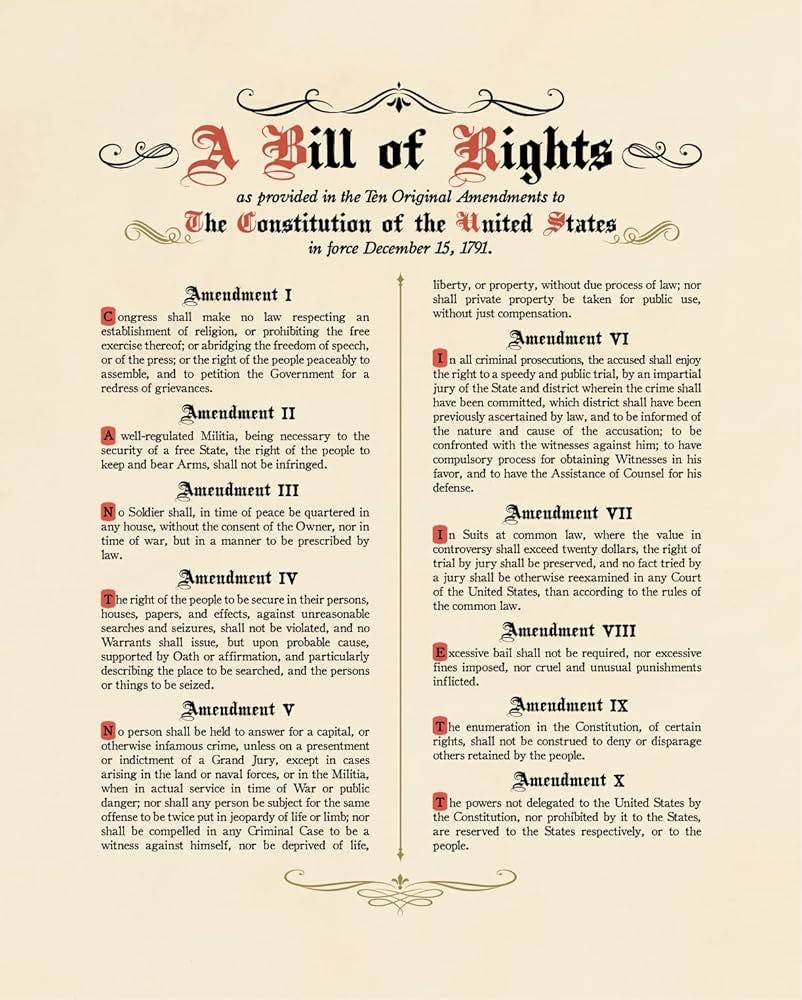

On December 15, 1791—234 years ago today—the young united States of America took one of its most decisive and enduring steps toward safeguarding individual liberty when ten of the original twelve proposed amendments to the Constitution were ratified by the required number of states and officially became known as the Bill of Rights, a foundational charter of freedoms designed to place firm limits on federal power and to protect the natural rights of the people; born out of intense debate between Federalists, who believed the Constitution already implied sufficient protections, and Anti-Federalists, who feared centralized authority without explicit restraints, these amendments were championed and carefully drafted by James Madison to ensure ratification of the Constitution itself and to answer widespread concerns that hard-won liberties could be eroded by an overreaching government; the First Amendment guaranteed core freedoms of religion, speech, press, assembly, and petition, establishing an unprecedented commitment to free expression and conscience, while the Second affirmed the right of the people to keep and bear arms as a safeguard against tyranny, and subsequent amendments secured protections against unreasonable searches and seizures, compelled self-incrimination, excessive bail and cruel punishments, as well as the rights to due process, fair trials, and legal counsel; equally important, the Ninth and Tenth Amendments made clear that rights not expressly listed were retained by the people and that powers not delegated to the federal government were reserved to the states or the people, reinforcing the principle that sovereignty ultimately rests with the citizenry rather than the state; together, these ten amendments transformed the Constitution from a structural framework of government into a living shield for individual liberty, setting a global precedent for constitutional rights and influencing democratic movements around the world, while continuing to serve—generation after generation—as a reminder that freedom is not self-executing but must be clearly defined, vigilantly protected, and faithfully upheld according to both its letter and its spirit.