
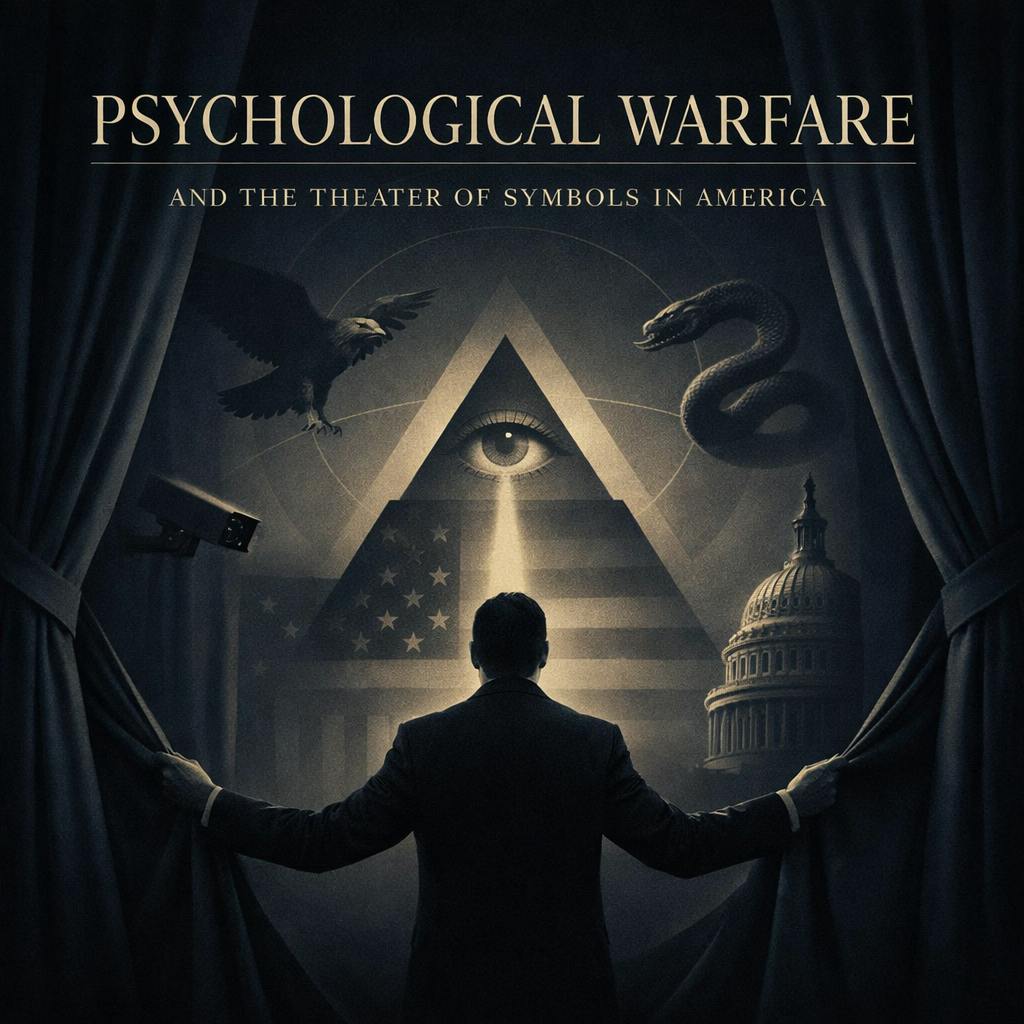
Psychological warfare in America rarely takes the form of overt coercion; instead, it operates through a sophisticated theater of symbols, narratives, and emotional cues that shape perception, behavior, and belief long before citizens recognize they are being influenced, and this symbolic battlefield has become one of the most decisive arenas of modern power. At its core, psychological warfare functions by guiding how people interpret reality—what they fear, what they trust, and what they consider normal—using recurring imagery, slogans, archetypes, and cultural references that bypass rational scrutiny and speak directly to emotion and identity. Throughout American history, symbolic authority has been embodied in familiar metaphors: the “man behind the curtain” from The Wizard of Oz representing illusory power maintained through spectacle, or the dystopian surveillance state of George Orwell's 1984, which illustrates how language, fear, and manufactured truth can discipline entire populations without constant physical force. In contemporary America, these symbolic frameworks are echoed in political branding, media narratives, and cultural icons that reduce complex realities into emotionally charged shorthand—heroes and villains, patriots and traitors, safety and chaos—thereby simplifying decision-making while quietly narrowing the range of acceptable thought. Symbols such as masks, flags, colors, numbers, and even dates become psychological anchors, repeatedly reinforced until they acquire meaning beyond their original context, shaping public reaction almost automatically. Psychological warfare does not require centralized conspiracy to be effective; it thrives through repetition, amplification, and emotional saturation, especially when institutions, media, and technology align incentives around attention, fear, and outrage. Social platforms accelerate the theater by rewarding emotionally potent symbols over nuanced analysis, ensuring that images and slogans spread faster than context or verification, while algorithms quietly shape what millions see, believe, and discuss. The result is a cultural landscape where perception often outweighs substance, and where power is sustained less by law or force than by the management of belief itself. Understanding psychological warfare in America, therefore, requires stepping into an observing perspective—recognizing how symbols operate, questioning why certain narratives dominate, and distinguishing between authentic reality and staged meaning—because only through awareness can citizens reclaim agency in a society where the most effective battles are fought not on physical ground, but in the collective mind.