
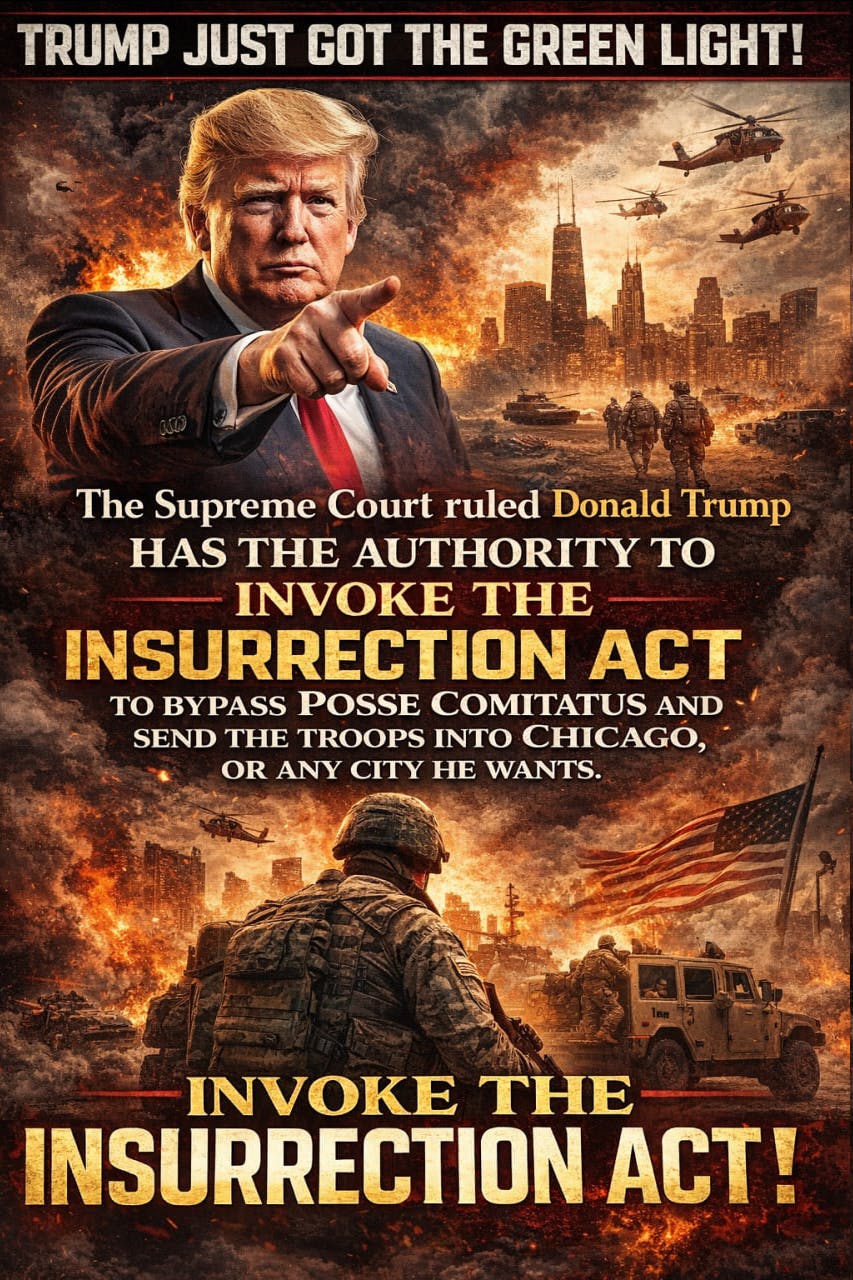
What some initially portrayed as a victory for the Democrats is, in reality, a strategic clarification by the Supreme Court that affirms presidential authority rather than limits it. Far from restraining President Trump, the Court effectively confirmed that the President of the United States possesses the lawful authority to invoke the Insurrection Act when he determines circumstances require it. This authority is not conditional on political approval, media narratives, or opposition party consent—it is rooted in longstanding constitutional law.
The Insurrection Act has been invoked by multiple presidents throughout American history, across party lines, during moments when federal law could not be enforced or constitutional rights were being obstructed. The Court’s position reinforces that this power resides within the executive branch and is exercised at the President’s discretion, just as it has been by many presidents before him. Whether political opponents agree or disagree is lawfully irrelevant; disagreement does not negate constitutional authority.
Ultimately, the ruling serves as a reminder that presidential powers are defined by the Constitution and federal law—not by partisan interpretation or public opinion. Claims that a president “lacks authority” simply because one party opposes its use reflect political frustration, not legal reality. The law is clear, the precedent is established, and the authority remains firmly vested in the office of the presidency.