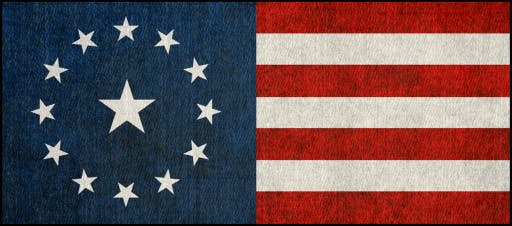


In the summer of 1876 the United States celebrated a centenary of independence. Although it was a jubilee year, the American Republic was also deeply troubled. The desperate battles of the Civil War had ended more than a decade before; yet Abraham Lincoln’s call for ‘malice toward none’ remained an unfulfilled appeal, as Federal troops continued to occupy some of the former Confederate States. President Ulysses S. Grant’s second term of office was drawing to a close under a barrage of criticism directed at corruption in his government. The coming Presidential election would take place in November.
It promised to be an exciting fight, but no one foresaw that the struggle between Republican Rutherford B. Hayes and Democrat Samuel J. Tilden would result in an unparalleled scandal and bring America perilously close to another civil conflict. Indeed, the roots of the dispute were firmly woven into the Civil War and its tragic aftermath.
On April 9th, 1865 General Robert E. Lee surrendered the Army of Northern Virginia and the guns at Appomattox stopped firing. The Civil War drew to a close. In four years of grim fighting the troops of both sides had developed a respect for each other, a bond of harsh experiences mutually endured. Now Yankees shared their rations with Confederates and traded wartime stories.
The day after the surrender, Abraham Lincoln returned to Washington after a visit to Richmond. A wildly cheering crowd called for a speech, but the President demurred. Instead, he asked the military band to strike up ‘Dixie’. For a brief moment there seemed to be hope of genuine reconciliation. It was unquestionably Lincoln’s fervent hope. Then, only days later, John Wilkes Booth fired a fatal bullet into the President’s head at Ford’s Theatre in Washington.
With Lincoln’s death, the ‘Radicals’ in the Republican Party gained the upper hand. For men like Thaddeus Stevens of Pennsylvania and Charles Sumner of Massachusetts, the South fully deserved the revenge they had planned. The bitter years of ‘Reconstruction’ followed. Government tax-collectors enjoyed a bonanza below the Mason-Dixon Line. General Lee’s magnificent home at Arlington was seized for taxes. Properties worth thousands of dollars were sold for a few hundred and Federal Treasury agents laid claim to supposedly abandoned land. Even General William Tecumseh Sherman, whose army made the famous march from Atlanta to the sea, burning and destroying everything in its path, spoke in compassionate terms to a veterans’ gathering shortly after the war:
Look to the South, and you who went with me through that land can best say if they too have not been fearfully punished. Mourning in every household, desolation written in broad characters across the whole face of their country ... her proud men begging for pardon and appealing for permission to raise food for their children; her five millions of slaves free and their value lost to their former masters forever.
It was in this atmosphere that white Southerners fought to regain control of South Carolina, Texas, Virginia, Florida and other states of the former Confederacy; the newly emancipated slaves fought for a place in a society previously denied them; and political scavengers fought to hang on to the spoils of war. Gradually, however, the South returned to the control of its native white population. In doing so, it became more solidly attached to the Democratic Party than ever before.
Due to the presence of Federal troops and officials in positions of power, Ulysses S. Grant was able to carry eight southern states for the Republican Party in the Presidential election of 1868. Grant won a second term in 1872, but this time only six southern states were in the Republican camp. The grip of Radical Republican power was fading. Perhaps more significant, the immediate post-war zeal in the North for African-American welfare had diminished.

As the election of 1876 approached, Grant’s Republican administration reeled under a heavy attack by the press when a great whisky scandal broke. Western distillers had been flagrantly evading Federal taxes, and Grant’s own private secretary, General Babcock, was implicated. The President’s enemies gleefully pointed to corruption in the White House. Instead of dissociating himself from Babcock, Grant leaped to his defence.
Indeed, Grant displayed an almost incredible loyalty to dubious colleagues during his Presidency. His support of Babcock largely contributed to an acquittal. But this was just part of the rapidly mounting troubles faced by the Republican Party.
In March 1876, just eight months before the election, Secretary of War William Belknap was charged with malfeasance in office by the House of Representatives. Rather than remove Belknap from his post, Grant merely accepted the cabinet member’s resignation. One month later it was James G. Blaine’s turn to embarrass the Administration. As Republican leader in the House of Representatives, Blaine was in a most influential position. When the press charged that he had taken favours from the Union Pacific Railroad, the tag of ‘Grantism’ received new life as a synonym for political avarice.
The scandals could not have come at a more inopportune time, for the Republicans desperately needed a politically untarnished standard-bearer in the coming election and Blaine was a strong candidate. Despite the publicity, Blaine’s name was prominent when the Republicans met at Cincinnati, Ohio, on June 14th to nominate a contender for the Presidency. Recognising that public attention had to be focused on something other than the Administration’s record, Blaine attacked the South and stirred up fears of a new war. In doing so, he alienated those members of his party who sought a genuine rapprochement with the old Confederacy. On the seventh ballot, he lost the nomination to a ‘dark horse’ candidate, Rutherford B. Hayes of Ohio. Hayes was a compromise between the extreme wings of the Party. Above all, his personal record and political integrity could not be seriously challenged.
The 53-year-old Hayes had a good, if not spectacular, background. Born in Delaware, Ohio, he had been raised by a widowed mother who, fortunately, enjoyed financial security. He received a degree from the Harvard Law School in 1845 and subsequently accepted a number of fugitive slave cases. During the Civil War, Hayes rose to the rank of brevet major-general of volunteers, participated in many actions and was severely wounded. While the war still raged he was elected to Congress. He was later elected Governor of Ohio on three separate occasions and put through a number of reforms.
In accepting the nomination, Hayes vowed to end the spoils system and called for an end to ‘the distinction between North and South in our common country’. This conciliatory statement was in sharp contrast to Resolution Number 16 of the Party Platform which went so far as to question the loyalty of the Democratic majority in the House of Representatives. This allegation reflected the presence of Congressmen who had fought for the Confederacy.
The Democrats had no problem in devising their campaign strategy. The entire nation was aware of the Administration’s shortcomings. Corruption was the issue and the Democratic Party promised reform. On June 27th they held their convention in St Louis, Missouri. In an auditorium jammed with 5,000 people, Governor Samuel J. Tilden of New York scored a landslide victory on the second ballot.

Tilden was a unique figure, and certainly one of the most interesting to cross the American political scene. This frail, cold, articulate bachelor commanded a crusading zeal from his supporters. As a boy, Tilden was withdrawn and showed little inclination to mix with young people. Politics, however, fascinated him and his father fostered that interest. At the age of 15 he used his own money to buy Adam Smith’s Wealth of Nations. By 1841 he was a qualified lawyer with a continuing and consuming interest in politics. His brilliant grasp of political matters brought him to the attention of Democratic leaders who sought his counsel. For some time Tilden studiously avoided candidacy for high public office, but his own abilities soon brought him national recognition.
A particularly significant event was Tilden’s exposure and prosecution of New York’s notorious racketeer, ‘Boss’ William M. Tweed. His popularity soared and he was elected Governor of New York. Then he broke up the Canal Ring, a group of crooks and unscrupulous politicians. Tilden’s name became associated with integrity in politics. This was just what the Democratic Party wanted as a contrast to the Republican Administration.
The battle lines were clearly defined. Left to themselves, it is possible that Hayes and Tilden might have kept the election campaign free from distortion of facts and bitter personal invective, but it was not to be. Tilden was subjected to a number of damaging of charges. There seemed to be no limit to the accusations: that he was a liar, swindler, perjurer, counterfeiter and even an absurd claim that he had been in league with the infamous Tweed. In line with their basic campaign strategy, the Republicans alleged that Tilden had supported the Confederacy, the right of secession and the continuation of slavery. This all stemmed from his opposition to Lincoln in 1860, but that was because he was a Democrat and feared a Republican victory would bring disaster to the United States. This feeling had no bearing on his fundamental loyalty to the Union, and once the war began he had urged the quick suppression of the Confederacy.
As election day approached, excitement grew with each rally and parade. It was, after all, the centenary of American independence. Even politically apathetic citizens came out for Hayes or Tilden with great enthusiasm. But on polling day, November 7th, calm prevailed as people made their way to voting centres. It was a stillness soon to be shattered. Hayes’ hopes began to sink as swing states such as Connecticut, Indiana and New Jersey went to Tilden. When New York finally fell into Tilden’s camp, Hayes admitted defeat to those around him and went to bed.
Tilden was not only leading in the popular vote: he had 184 of the far more important electoral votes to Hayes’ 166. The 19 votes of South Carolina, Florida, and Louisiana were had not yet been declared, but they were in the heartland of the Democratic South. At the Republican National Headquarters, exhausted and dispirited party workers began to go home. On the morning of November 8th, the press of both parties was crowded with news of Tilden’s victory. Even the militantly Republican New York Tribune conceded the election.
The New York Times, however, would do no more than admit a Democratic lead. Two days after the election, John C. Reid, the newspaper's influential editor, sat in the editorial room with two assistants. It was after 3am when a message arrived from the State Democratic Committee: ‘Please give your estimate of the electoral votes secured by Tilden. Answer at once.’ Reid was astounded. If they urgently needed such information, then the Democrats were not certain of victory. In a matter of minutes he conceived a scheme to wrest the election away from Tilden and put Rutherford B. Hayes into the White House. Tilden had 18 more electoral votes than Hayes, but if the 19 from South Carolina, Louisiana and Florida were secured by the Republicans, Hayes would win by one vote, 185 to 184.

Reid, accompanied by a Republican official, hurried into the night and awakened Zachariah Chandler, National Republican Chairman. Chandler agreed to Reid’s proposal: telegrams must be sent immediately to Republican officials in the three states, with the following message: ‘Hayes is elected if we have carried South Carolina, Florida and Louisiana. Can you hold your state? Answer immediately.’ The meaning was clear: those states were to be held at any cost. At the same time, Republican headquarters proclaimed Hayes’ election.
The key to the plot’s success lay in the state canvassing boards. They had the power to certify the votes and cast out those that, in the board’s opinion, were questionable. The need for absolute honesty by the boards in exercising their power was self evident, but the personnel of some made comedy of that requirement. Of course, all of the boards were Republican and backed by Federal troops.
Initially, Hayes dissociated himself from the plan, saying: ‘I think we are defeated ... I am of the opinion that the Democrats have carried the country and elected Tilden.’ A few weeks later, however, he changed his mind: ‘I have no doubt that we are justly and legally entitled to the Presidency.’
From the beginning there was an outside chance that Hayes could have carried South Carolina and Louisiana on the strength of votes from African-Americans and ‘carpetbaggers’ (a pejorative term for Northerners who moved South during the Reconstruction). Florida’s heavily Democratic white majority, however, made that state a dim prospect for Republican hopes. But they had to have Florida or Tilden would win by 188 to 181. During the actual election campaign, all three states witnessed a wide variety of attempts by both sides to cow voters and fraud was rampant. In one shameful tactic, the Democrats tried to distribute ballots with the Republican emblem prominently displayed over the names of Democratic candidates. It was worth the chance in the hope of picking up votes from illiterate voters. On the Republican side, one inspired person devised ‘little jokers’. These were tiny Republican tickets inside a regular ballot. A partisan clerk could slip them into the ballot box with little chance of being detected.
In Louisiana, Tilden held a comfortable majority over Hayes. And in New Orleans, the Democratic elector with the smallest plurality had more than 6,000 votes over his Republican opponent. The canvassing board solved the problem in that state by simply throwing out 13,000 Tilden votes against only 2,000 for Hayes. Then the electors for Hayes were certified.
The prelude to the election in South Carolina was a bloody affair. The Governor was Daniel H. Chamberlain of Massachusetts, a strict dogmatist on the race question and thoroughly loathed by white South Carolinians. In addition to the Presidential election, there was a gubernatorial race. The Democrats were running a war hero, former Confederate General Wade Hampton. ‘Rifle clubs’ were organised over the entire state by Hampton’s supporters and there were numerous clashes with African-American groups. As far back as July 8th, there had been a sharp fight in Aiken County at which African-Americans suffered a severe defeat. Chamberlain appealed to President Grant for help. Grant described the rifle clubs as ‘insurgents’ and sent all readily available troops to South Carolina. The resultant fury at this action was compounded when the Republican canvassing board ensured the certification of Hayes’ electors.
Florida was the most critical problem. As the polling booths closed, each side claimed victory. Once again, the canvassing board held the decision in its hands. The three-man board was dominated by two Republicans, Florida’s Secretary of State and its Comptroller. The third man was the Democratic Attorney General. The board had the right to exclude ‘irregular, false or fraudulent’ votes. In a complete travesty of integrity, the board voted for Hayes by virtue of its Republican majority. Thus, Florida’s key electoral votes went to Hayes. The Republican Governor certified them with the official blessing of the state. The outraged Democrats held a meeting and had the Attorney General certify the Tilden electors. With this action, a new and dangerous complication entered the scene. Democrats, claiming dishonesty by the canvassing boards, were certifying their own electors by whatever legal or quasi-legal means they could. To further complicate matters, Florida Democrats elected G. F. Drew as Governor and he appointed a new board of canvassers who promptly judged Tilden’s electors to be victorious. In South Carolina, where Wade Hampton had been elected Governor, there were unqualified demands to disenfranchise the Hayes electors.
As a precaution, General Grant ordered Federal troops into all three state capitals, directing General Sherman ‘to see that the proper and legal boards of canvassers are unmolested in the performance of their duties’. That meant Hayes would win. At this point, Samuel Tilden’s followers almost begged him to denounce the plot publicly, but he would no nothing to prejudice the legal process. This is somewhat difficult to understand in view of his previous anti-fraud successes.
The Senate and House of Representatives convened for the second session of the 44th Congress on December 4th, 1876. It was just two days before the date set for Presidential electors chosen in each state to meet and declare their choice for President and Vice-President of the United States. It was the responsibility of each state Governor and Secretary of State to affix the official state seal to the voting certificates and send them to the President of the Senate in Washington D.C. who would then count them before a joint session of Congress.
Since the Senate was controlled by Republicans, the Democratic House demanded the right to decide which votes were valid. The Senate, understandably, refused. Here was an incredible situation; each day bringing the United States closer to March 4th, the date when Grant’s term expired. Who would succeed him and how would it be done? Rumblings of a new civil war rolled ominously across America. There were drills and parades and wartime units began to reform. Even cool heads discussed the possibility of the National Guard, under the command of Democratic Governors in most states, marching on Washington to install Tilden by force, if necessary. In that case, the Regular Army under Grant would oppose the Guard as Hayes had been ‘legally’ elected.
It was an unthinkable prospect. Fortunately, there were men of influence on both sides who saw that a peaceful solution was absolutely mandatory. On December 14th, the House appointed a committee to approach the Senate in the hope that a tribunal could be created; one ‘whose authority none can question and whose decision all will accept as final’. After much debate, an Electoral Commission was approved. Congress proceeded to set up a group of 15 men; five from the Senate, five from the House and five from the Supreme Court. Presumably, the Court Justices would be non-partisan. Both Hayes and Tilden declared the Commission unconstitutional, but they reluctantly agreed to accept its verdict.
It was clear to everyone what would happen without the Commission. Republican Senator Thomas Ferry of Michigan, presiding officer of the Senate, would open the certificates before a joint session and declare Hayes the winner by 185 to 184 electoral votes. The House would then immediately adjourn to its own chambers where Speaker Samuel Randall would declare no electoral majority and throw the election into a vote by each state delegation in the House. That would assure Tilden’s victory, and on March 4th, 1877 both Hayes and Tilden would be in Washington to be inaugurated as President of the United States. Senator Roscoe Conkling of New York described this route as a ‘Hell-gate paved and honeycombed with dynamite’. It was no understatement.
The Commission held its first session just four weeks before the inauguration. Democratic members of the Commission pressed for a searching examination of the honesty of the canvassing boards. The Republican members claimed that the legal state authorities had filed legitimate certificates and Congress had no power to interfere.
The Commission finally voted along party lines with the decision going to Hayes, 8 to 7. On Friday, March 2nd at 4am, the Senate awarded the last certificate to Hayes. It was just two days before the inauguration. The fury of the South was matched by its Democratic allies in the North. All eyes turned to Samuel J. Tilden. If he claimed that the will of the American people had been frustrated by partisan duplicity and fraud, then America faced civil war. Instead, Tilden said: ‘It is what I expected.’

Open conflict might still have been a possibility except for a meeting that has since been the subject of much speculation. One week before the inauguration, Southern Democrats and Republicans met at the Wormley Hotel in Washington in an effort to find some compromise before it was too late. There is ample evidence to suggest that a quid pro quo was reached; the South to agree to Hayes’ election if the North would agree to abandon all efforts to maintain carpetbag regimes in the South. That meant withdrawal of Federal troops. In return, the South presumably agreed not to take reprisals against African-Americans or carpetbag officials.
For that matter, the South and its Democratic friends in the North already held a powerful sword over the head of the United States Army. They attached a clause to the Army Appropriations Bill that outlawed the use of Federal troops to sustain state governments in the South without Congressional approval. When the Senate refused the clause, the House simply adjourned and left the Army without funds to pay soldiers. Morale collapsed and the end of Reconstruction was at hand.
After the decision, Tilden commented: ‘I can retire to private life with the consciousness that I shall receive from posterity the credit for having been elected to the highest position in the gift of the people, without any of the cares.’ That summer he sailed for Europe for a year’s vacation. Rutherford B. Hayes took the oath of office in private, kissing the open Bible at Psalm 118:13 ‘... the Lord helped me’.
There was no inaugural parade or ball. There was little to celebrate.
By Louis Kleber

His home is a few miles NE of me. Been through it (now a museum) a couple times where some of these details are shown in the articles present. Lets us know not a lot has changed in politics.
Abraham Clark, a lesser-known but significant figure among America's Founding Fathers, Born on February 15, 1726, in Elizabethtown, New Jersey, Clark's life was characterized by unwavering dedication to his principles, commitment to the American cause for independence, and an enduring legacy that continues to inspire generations. His life's journey was woven with threads of resilience and unwavering dedication. In the turbulent times of the American Revolution, Clark stood as a beacon of moral integrity, advocating for the liberties and rights of his fellow countrymen. As a signer of the Declaration of Independence, he etched his name into the annals of history, demonstrating that the pursuit of justice and the preservation of individual freedoms were values worth sacrificing for. His legacy endures not only as a testament to his enduring spirit but also as an inspiration to all who seek to champion the principles upon which America was founded. Abraham Clark's life serves as a reminder that even the lesser-known figures in history can leave an indelible mark on the world when their character, principles, and unwavering dedication align with the course of destiny.
Abraham Clark's early life was marked by modest beginnings. He was the sixth of ten children born to Thomas Clark and Hannah Winans. His family's limited resources did not deter his pursuit of education and knowledge. Clark's strong sense of self-reliance and determination led him to become a successful farmer and surveyor, laying the foundation for his later involvement in politics.
Clark's entry into politics marked the beginning of his significant contributions to the American Revolution and the formation of the United States. He was elected to the New Jersey Provincial Congress in 1775 and was subsequently chosen as a delegate to the Continental Congress in 1776. It was within the hallowed halls of the Continental Congress that Clark made his mark as a dedicated patriot and advocate for independence.
One of Abraham Clark's most notable contributions was his unwavering support for the Declaration of Independence. On July 2, 1776, Clark and his fellow delegates debated and voted in favor of declaring independence from British rule. Two days later, on July 4th, the Declaration of Independence was officially adopted. Clark's signature on this historic document cemented his place in American history and his commitment to the cause of liberty.
However, Abraham Clark's sacrifices and contributions extended far beyond his signature on the Declaration of Independence. His unwavering support for the American Revolution came at a great personal cost. During the war, two of his sons, Thomas and Aaron, were captured by British forces and imprisoned on the notorious prison ship Jersey. Despite their suffering, Clark refused to recant his support for independence, displaying remarkable fortitude in the face of adversity.
Tragically, Thomas Clark succumbed to the harsh conditions of his imprisonment, becoming one of the many unsung heroes who sacrificed their lives for the cause of American independence. Abraham Clark's dedication to the principles of liberty remained unshaken, and he continued to serve in various political capacities, including the New Jersey state legislature.
Abraham Clark's life serves as a testament to the values that underpin the American experiment: freedom, resilience, and unwavering commitment to principles. His legacy continues to inspire Americans to this day, reminding us of the sacrifices made by the Founding Fathers to secure our nation's independence.
In conclusion, Abraham Clark may not be as widely recognized as some of his fellow Founding Fathers, but his contributions to the American Revolution and the establishment of the United States are no less significant. His steadfast support for independence, even in the face of personal tragedy, and his dedication to the principles of democracy make him a true patriot and a symbol of American resilience. Abraham Clark's legacy endures as a reminder of the sacrifices made by those who laid the foundation for the nation we cherish today.

A Country Defeated In Victory Part I" delves into a sobering historical perspective of the United States, shedding light on a lesser-known aspect of its journey. In the opening paragraph, the author sets the stage by revealing that the country referred to in the title is none other than the United States itself. This revelation immediately captures the reader's attention, prompting them to inquire about the nature of this "defeat in victory."
The paper then quotes two prominent figures in American history, President Abraham Lincoln and Thomas Jefferson, whose words provide a thought-provoking context for the narrative. Lincoln's quote emphasizes the idea that internal challenges pose a greater threat than external forces, foreshadowing the paper's exploration of a hidden adversary within the nation's own financial system. Jefferson's quote, on the other hand, suggests a profound distrust of banking institutions, hinting at a theme that will be further developed.
In the final paragraph of this introductory description, the author hints at the central thesis: the country's defeat stems from the use of paper money instead of gold and silver coinage, leading to a web of debt controlled by international bankers. The reference to differing weights and measures adds depth to the historical context, underscoring the intricate web of financial challenges faced by the fledgling United States. Ultimately, the reader is left intrigued and eager to explore the detailed analysis of this intriguing historical perspective in the subsequent parts of the paper.
Dec. 23, 2012
As an investigative research specialist I have been, for over a decade now, following the money trail so to speak of the who, what, when, where, how, and why crucial elements of America's financial slow death.
This research has not been an easy task but through persistence and perseverance it has been fruitful. With the assistance of many others across America and Canada on this same quest our combined work exposing this devious plan to overthrow the world through financial domination has now been nearly fully exposed, the key players now stand naked before us with nowhere to run and certainly nowhere to hide.
This paper will not provide the reader with all the documented evidence gathered though the years, however, it will provide the pattern exposing the means, method, motive, opportunity and intent of this diabolical event that has left no corner of the world unaffected.
The reader must understand that it took centuries and generations to get where we are today, which is nearly the peak and grand finale of this attempted one world order. In following a pattern of crime one must always follow the money. This will be explained to the reader how this international theft has converted everything of monetary value into the few and mighty, known as the "Banksters."
Some of the documents read to follow this trail date back to 1199. Others date to 1213, that being the "Magna Carta 1215," "The Privileges and Prerogatives Granted by Their Catholic Majesties to Christopher Columbus April 30, 1492" also is part of the evidence exposing this worldwide fraud.
Numerous Charters read are dated in the 1600's, including; "The First Charter of Virginia April 10 1606," "The Second Virginia Charter 23 May 1609," "The Third Charter of Virginia; March 12, 1611," "The Charter of New England: 1620," "Charter for the Province of Pennsylvania-1681," "Charter of the Corporation of the Bank of England 1694,."
In 1826 came the Bankruptcy Law which came under "Agriculture".
Additionally, documents dating back to 1863 include the letters to and from The Rothschilds found in "Vindication" and further explained in "A Country Defeated In Victory Part II (see pages 2-6) by James Montgomery."[4] The letters found in these documents even include the mathematical formula the Rothschild's crafted showing intent and how the bank notes will provide such a great profit no one could resist the investment and those uneducated will bear the brunt of the burden.
Also put into play in 1863 is the First Bank Act, that of which Abraham Lincoln could see what the future held for America and drafted The Lieber Code, also known as General Order 100. President Lincoln placed the military in charge of America's real money protecting the assets from the cancerous international bankers spreading to anyone coming in contact with the toxic Rothschilds blood with no antidote but for those blue bloods.
In 1867 The Reconstruction Act was passed placing the country under military authority, to which Andrew Johnson vehemently opposed and drafted his veto.
In 1907, The Corporation Trust Company of America was created as a Delaware Corporation, later amended on April 15th 1930 to The Corporation Trust Company, now omitting the words "of America" as it now had become a worldwide Corporation through which every deed, document, contract and securities is funneled.
"To keep and maintain safe deposit vaults and boxes and to take and receive upon deposit for safe keeping and storage stocks, bonds, securities, papers, books and documentary records and personal property of every sort or kind, and to let out vaults, safes and other receptacles.
To promote, reorganize or otherwise assist and afford facilities to any company or companies organized or to be organized under the laws of the State of Delaware or elsewhere and desiring to do business in the State of Delaware and elsewhere, and to act as the agent, trustee or otherwise for and in behalf of such corporation"....
In addition to the above referenced documents numerous Congressional Records were also diligently studied to obtain evidence of a pattern of fraud committed worldwide. Some of those Congressional records are The Federal Reserve Act of 1913, and Trading with the Enemy Act of 1917.
"...On May 23, 1933, Congressman, Louis T. McFadden, brought formal charges against the Board of Governors of the Federal Reserve Bank system, The Comptroller of the Currency and the Secretary of United States Treasury for numerous criminal acts, including but not limited to, CONSPIRACY, FRAUD, UNLAWFUL CONVERSION, AND TREASON.
The petition for Articles of Impeachment as thereafter referred to the Judiciary Committee and has YET TO BE ACTED ON".....
The U.S. Bankruptcy of 1933 is yet another key in this expose' of international fraud committed by the few elitists claiming all worldly rights.
Also part of this devious plan is The Bankruptcy Act of June 27-28 1934;
"...To amend an Act entitled "An Act to establish a uniform system of bankruptcy throughout the United States", approved July 1, 1898, and Acts amendatory thereof and supplementary thereto."......
June 28, 1934, Is.3550.1, [Public, No. 486.]
Even further documented evidence supporting the intent of world domination is shown through the Congressional Record of 1940. This document shows that the vying parties were the Jewish money changers and the English Colonists, which were explained in greater detail in the Charters listed above.
After 1940 in this intentional chain of events comes the International Organizations Immunities Act of December 9, 1945.
In 1946 the United Nations Charter was drafted, but the US Bankruptcy of 1933 shows that that act was done through The UN, which for anyone who can do the math will clearly see was 13 years before the UN existed, further establishing the intent, forethought and malice in the plot to rule the entire world through the Rothschild's International Banks, already indebted to the Vatican, which would now be aiding and abetting as a co conspirator as the Vatican is also known as "Banco Vaticano," meaning Vatican Bank.
Certificate of Incorporation of Corporation Trust Company of America, 26th day of March 1907
Federal Reserve Act, 1913
Trading with the Enemy Act Oct 6, 1917-HR 4960
Congressman McFadden on the Federal Reserve Corporation Remarks in Congress, 1934 AN ASTOUNDING EXPOSURE
CONGRESS. SESS. I. C S. 868, 869. JUNE 27, 28, 1934. 1289
US Congressional Record Proceedings and Debates of the 76th Congress, Monday August 19, 1940 Third Session, Debate of Honorable Judge Thorkleson, Steps Toward British Union, a World State, and International Strife-Part I
International Organizations Immunities Act, December 9, 1945 AN ACT To extend certain privileges, exemptions, and immunities to international organizations and to the officers and employees thereof, and for other purposes
There are so many documents providing irrefutable evidence of this intent to control the world's wealth by the banks that the reader would become overwhelmed before even getting to the best part of this plot.
Though between 1946 and today, there is just as much evidence to disclose of the continued bank fraud that it would be easier to incorporate in entirety by reference previously entered documents and testimony as public records by those across America who have provided the [courts] additional supporting facts and records but since the courts are acting by/for/with/through/under the banks the cover up that exists is greater than or equal to the initial diabolical plan itself.
The phrase "He who owns the gold makes the rules" certainly applies here. This includes, making, taking, faking and hiding the gold, wherein there is no honor among these thieves.
Now that the plan is exposed by diligently following the paper trail left behind by these careless actors the reader should now turn to definitions employed so deceitfully the average person scans right over the evidence not catching the twisted version of truth right before their eyes. Watch and learn how this is done.
Definitions to pay close attention to, now with a different perspective will be addressed. Again, the entire Webster's Dictionary could be thrown in here as well as Black's Law Book, but not to confuse the reader only those terms directly relevant to this intentional bank fraud by design will be addressed. However, the readers initiative to delve deeper is urged.
Operative words are; "DEBT" that which is common to nearly all as the plan is to keep one under that immovable boulder. This word is defined in Black's Law Book, Abridged Fifth Edition as;
"DEBT"
"A sum of money due by certain and express agreement. A specified sum of money owing to one person from another, including not only obligation of debtor to pay but right of creditor to receive and enforce payment. Bankruptcy Act § 101 (11)."
Note this refers back to the Bankruptcy Act. This Act placed the American people as the Creditors, and the United States as the Obligator, the debtor. It was established that Americans signatures were to be used as credit, BUT, the other side of the coin is that the United States and their Trustees, were to charge off ALL debts, as in any bankruptcy.
What, in fact, has occurred instead is blatant thievery through the banks' fraudulent securitization of American people, and people in all other countries by deceptive use of the peoples' signatures, but, the banks and The Comptroller of The Currency are not charging off the peoples' debts, rather are converting such into private corporate profits instead. (See Corporation Trust Company)
For example, when paying utility bills, now employing the newly discovered extrinsic evidence, it is clearly obvious to anyone that a utility bill is sent to the individual, who then either writes a check, or pays the "bill" in Federal Reserve Notes (See the Letters to/from The Rothschild's). Now the utility company takes that "Note" and the "bill", which is really a dividend, and converts it into a "Convertible Debt."
"Convertible Debt"
"Debt which may be changed or converted by creditor into another form of security, e.g. Shares of stock."
This now shows that after paying one's utility "bill," with nothing more than another debt, the utility company has now converted the Corporation into the Creditor, and the person paying the "bill" is now unknowingly becoming the debtor, but the Comptroller of the Currency, The US Treasury and the United States as the Obligator have not charged off any of the debt, but rather reinvested into their own private Corporations for municipal bonds and grants etc, dealing those profits out to themselves, after fraudulently converting and stealing from the people who are, in fact, the Creditors of the US Bankruptcy of 1933, and whom Abraham Lincoln protected by drafting The Lieber Code in 1863, knowing the banks intentions.
This is how the theft of Americas wealth is being committed right under everyone's nose and right before their eyes. Additionally found in Black's Law under “Debt” follows “Fraudulent Debt.”
“Fraudulent Debt”
“A debt created by fraud. Such a debt implies confidence and deception. It implies that it arose out of a contract, express or implied, and that fraudulent practices were employed by the debtor, by which the creditor was defrauded.”
Again, this is clearly explained above, however the reader should be grasping this intentional fraud and becoming aware how this has been played against anyone ever paying any utility bill in America. Utilities, by the way include; water, sewer, electricity, telephone, and department of transportation.
In order for these thieving International, National, Federal, local or subsidiary banks to access the true Creditors, that being the people of America, and this does apply around the world as well, this twisted truth by intentional fraud is so blatant and egregiously committed that even the local police and or sheriff departments are oblivious to the crimes committed by the banks who are using them as enforcers of and co conspirators in this racketeering operation, a design crafted originally by the Rothschild's, and their banks including key players not limited to Federal Reserve Banks, JP Morgan, Prescott Bush, Union Bank, to name a few employing all the utility companies, but not limited to, as the partners in crime, before, during and after the fact, committing and partaking in “Funded Debts”
“Funded Debts”
“Debt represented by bonds or other securities”.
Utility companies fraudulently receive what the utility customer believed to have been a payment for services provided, but it was all actually a fraud committed by the utility company turning the true creditor into a debtor through fraudulent means, then cashing in the “Notes” for “real money”, then further yet fraudulently pocketing those ill gotten gains deeper into their Corporation fraudulently converting into and obtaining bonds, which may include municipal bonds for developments, further placing the American people (and other countries people) into debt upon moving into such buildings now considered “The Debtor in Possession.”
This entire devious plan is so well orchestrated as the Rothschild's explained so much money was to be made the average people wouldn't understand but bear the brunt of the burden as defined in “A Country Defeated in Victory Part II, pages 2-6. “13”
The definition of “Debt” now takes the reader to “Debenture”
“Debenture”
“A promissory note or bond backed by the general credit of a corporation and usually not secured by a mortgage or lien on any specific property.
Certificate issued by customs to an importer for the deduction or refund of duties on merchandise imported and then exported by such importer.”
This then defines “Convertible Debenture”
“Convertible Debenture”
“Debenture which may be changed or converted into some other security (e.g. stock) usually at the option of the holder.”
The reader should easily follow this deceitful trail now clearly seeing the path of destruction left behind these bankers and every utility company, fraudulently turning every American, and all the people around the world, into a “Debtor,” now turning themselves into the “Creditor” and fraudulently converting Americans and all the other countries assets into liabilities with the bankers intent to own the world through debt.
Take this another step further. All licenses that Americans are “ordered” to have are also based on this US Bankruptcy Act of 1933 that was designed to rob the people.
However, licenses were another way to securitize on the people's signatures, as are any credit cards the reader my own, again, the debts were to be discharged but instead have been fraudulently converted into private corporate stocks, bonds, securities and other profits, then underhandedly shifted into other unsuspecting countries to commit the same as a perpetual Ponzi scheme that has no beginning or end, the Alpha-Omega of all crimes against mankind, that is until the second coming of Christ, for which this author awaits anxiously.
This expose' isn't through yet. The reader may now employ all of this newly discovered evidence, hopefully explained to a clear level of understanding, incorporating this same game of securitization fraud, but now overlay it over the judicial system.
Every single court across this country is a co conspirator to this sinister crime of perpetuity. How so one might ask? Federal judges are signing standing orders to invest all the court cases through the Court Registry Investment System, directly deposited into the Federal Reserve Bank located in Dallas/Houston, Texas.
Every court case is assigned, by the court administrator, a US Treasury Public Debt number, placed onto the court document, including but not limited to traffic citations, after the unknowing participants in the case have received their copy of the same, but without the added monetary transformation of that instrument into a financial transaction, which is the definition of a securitization.
After the Public Debt number is obtained, which now converts the instrument into a counterfeit obligation pursuant to USC TITLE 18 § 472 et seq.473;474, now the court administrator additionally counterfeits the same obligation by adding a CUSIP© number.
CUSIP© is the acronym for Committee on Uniform Securities Identification Procedures. It is a copyrighted registered trademark of The American Bankers Association. This means only one of two things. Firstly being the court administrators are knowingly committing copyright infringement violations in addition to uttering counterfeit obligations, and/or secondly that the court administrator must obviously be a member of the CUSIP©.
Now the courts have fraudulently converted every court case into a banking financial securities instrument, fraudulently converting the court into the creditor position and the respondent/plaintiff in the matter now unknowingly converted into the debtor. To make matters even worse for the judges, they are knowingly acting with a vested interest with insider knowledge as insider trading in addition to violations of judicial canons.
Further still, judges are to act without bias, to make rulings on the merit of argument, but instead are making financial investments on every case, knowing the exact meaning of every number and/letter applied to and now written on the face of the instrument in all cases in the form of the CUSIP© and are now ruling based on futures rather than rule of law, evidence, oral or written argument.
Additionally, the courts are also committing tax fraud by shifting the debt created by every particular case back onto the individual who is the actual Creditor, then fraudulently conveying the case into an investment instrument to be deposited into the Dallas Houston Texas Federal Reserve which now shifts money from the Creditor side of the transaction into the pockets of the Debtors side, deceptively laundered now as a fraudulent debt into Corporate assets, converted again into bonds, stocks, and grants given back to the county deceptively through the Department of Transportation, or some other agency, now squeaky clean after the laundry process. (Please refer to “Debenture,” “Convertible Debenture” and all the other definitions listed above.)
This “Analysis of a Country Embezzled” is but only a summarized version so as not to burden the reader with centuries of skilfully drafted plans and other devious activities of the Banks that even Abraham Lincoln acted to protect us from, paying the ultimate price as a result.
The reader should take the initiative to research all the key utility companies. For gas and electricity, start with ENRON. For telecommunications, start with ENRON. For wind and turbine, start with ENRON.
Bear in mind the reader should also follow the judicial fraud deep into the federation of county state municipal employees. This is a union dues paid membership union that includes correctional facilities. This goes clear into The Federal Prison Industry Inc, dba as UNICOR.
When researching UNICOR, start with ENRON, end with Halliburton. The reader may choose to cross reference some of the Clinton's numerous entities found in Delaware, where one my find the missing 16 metric tons of gold that inadvertently was “redirected” en route to China, mistakenly replaced with tungsten, another fraudulent conveyance from the actual Creditors, the Americans people. The Debtors, that being the banks, federal employees pursuant to section 3 of the 14th amendment as Trustees, and other county, state, city and other government offices, are now wrongfully in possession.
The intent of this article is to show the reader how to follow the evidence of the crimes perpetrated against the American people beginning with the International Bankers who slyly infiltrated this country via England, beginning with Christopher Columbus, by/through/with drafting treasonous legislation to take that which is not theirs.
There is no statute of limitations on fraud. And the second coming of the Messiah is closer than one thinks.
All God given rights reserved in perpetuity
By ;jeanette-audrey;[triplett]
Peter Force was a multifaceted figure in American history, known for his significant contributions as a printer, publisher, and historian. Born on November 26, 1790, in Passaic, New Jersey, Force's life would be marked by a deep commitment to preserving and disseminating the historical records of the United States. His remarkable journey would see him emerge as a pivotal figure in the field of American historical research.
Force's early years were characterized by his apprenticeship as a printer, a trade that he would come to master. He honed his skills in the art of printing, gaining valuable experience in producing newspapers, books, and other printed materials. This foundation in the world of printing would serve as a crucial stepping stone for his later endeavors.
In the early 19th century, Peter Force relocated to Washington, D.C., where he established himself as a prominent printer and publisher. His printing press played a vital role in disseminating information and knowledge during a time when newspapers were a primary medium for communication. Force's commitment to accuracy and reliability in his publications soon earned him a reputation for producing high-quality printed materials.
However, it was in the realm of historical preservation that Peter Force truly left his mark. Recognizing the importance of documenting and preserving the nation's history, he dedicated himself to collecting a vast array of historical documents, manuscripts, and records. His passion for historical research led to the compilation of what would become his magnum opus: "American Archives."
"American Archives" was a monumental undertaking, spanning nine volumes and encompassing documents from the early colonial period to the adoption of the U.S. Constitution. This ambitious project aimed to preserve the primary sources of American history, ensuring that future generations would have access to the authentic voices and records of the nation's founding era. Force's meticulous work in collecting and organizing these documents was an invaluable contribution to the study of American history.
Force's commitment to historical preservation extended beyond his publication of "American Archives." He played a pivotal role in the founding of the Historical Society of Washington, D.C., further promoting the importance of preserving and studying the nation's past. His efforts helped lay the groundwork for the establishment of other historical societies and institutions dedicated to preserving America's rich history.
In addition to his work as a printer, publisher, and historian, Peter Force was also active in civic life. He served as the mayor of Washington, D.C., from 1836 to 1838 and was involved in various philanthropic and educational endeavors in the city.
Peter Force's legacy as a printer, publisher, and historian is one of immense significance. His dedication to preserving the historical records of the United States, as exemplified by his monumental work "American Archives," continues to benefit scholars, researchers, and anyone interested in exploring the nation's history. His contributions to the field of historical research and the dissemination of knowledge remain a testament to the enduring importance of preserving the past for the benefit of future generations.
In conclusion, Peter Force's life journey from a printer's apprentice to a renowned publisher and historian showcases his unwavering commitment to the preservation and dissemination of American history. His tireless efforts to collect and publish historical documents have left an indelible mark on the study of American history and the broader fields of printing and publishing. Peter Force's legacy serves as a reminder of the enduring value of historical preservation and the vital role individuals can play in shaping our understanding of the past.
Some of his notable writings and publications include:
"American Archives: Consisting of a Collection of Authentick Records, State Papers, Debates, and Letters and Other Notices of Publick Affairs" - This is perhaps Peter Force's most famous work. It is a comprehensive collection of documents related to American history, spanning from 1774 to 1776. It includes records of the American Revolution, early government proceedings, and other key historical materials.
"National Calendar: A Repository of History, Biography and General Literature" - This publication contained various historical and biographical articles and was published in the mid-19th century.
"Tracts and Other Papers, Relating Principally to the Origin, Settlement, and Progress of the Colonies in North America from the Discovery of the Country to the Year 1776" - Another collection of historical documents and papers, this work by Peter Force focuses on the early history and colonization of North America.
"American Historical and Literary Curiosities, Consisting of Fac-Similes of Original Documents" - This publication included reproductions of important historical documents, giving readers a visual glimpse into the history of the United States.
https://www.loc.gov/item/mm80020990/

Respect each other
All posts must be on topic and relevant to the discussion
No offensive language
No personal attacks