

• HEALING Eczema/Psoriasis Treatments • Creams • Foundation • Lip 👄 Balm • Makeup • dry, cracked skin •
(Another hint is 100% pure (sheeps wool) Lanolin [is an ester, not a fat] for conditioning extremely dry, cracked skin, overnight).
… as per my ADHD routine, there’s lots of ideas and hints all rolled up into a single post. I encourage readers to take one standard recipe, and then tweak as necessary over your experience, to come up with your favorite recipes:
💋 SKIN CARE (& MAKE-UP):
BASIC WHIPPED TALLOW SKIN CREAM recipe, more specifics
This is a doubled batch of my first attempt:
• 16 oz warmed Beef home-rendered tallow
• 4 oz Caster Oil
• 4 oz Sweet Almond Oil
• 3-4 tsp Arrowroot Powder
• I divided the mixture in half, and put about 30 drops of LAVENDER Essential Oil in one 1/2 of the batch, and about 45 drops of Madagascar VANILLA Essential Oil in the second 1/2 of the batch.
***To WHIP IT: melt tallow to liquid; do not overheat.
I let it cool on the counter for 5 minutes,
put it in the fridge for 5 more minutes, then take it out and
whipped it for 6 minutes, then
put it back in the fridge for another 8 minutes, and
then whipped it again …
until I was happy with the consistency! Stiff Peaks are the goal.
I added Essential Oil, fragrances last.
It turned out extremely SILKY smooth!
Put the cream into a ziplock bag /with a tiny hole cut off one corner, or cake decorating bag, to effectively squeeze the cream into containers easily.
(ARROW ROOT - minimizes greasy feeling)
______________________
TALLOW whipped:
PIGMENTS: for skin, and or lip color:
Mad-Mica (Mica is an Iron Oxide powder that comes in many different shimmering colors). Iron oxide pigments
_______________
Someone else’s recipe: VANILLA
8oz tallow
1oz jojoba, 1oz castor, ½oz vitamin E, 1½oz sunflower Oil. (4oz oil total)
15-30 Drops of Essential Oils of Choice
2 teaspoons of vanilla bean paste
1-2 teaspoon of arrowroot powder
Our body butter is supper whipped, soft, but holds shape until you apply and its so light, silky, and fluffy.
_______
Here’s another option from Facebook friends:
I agree with adding some arrow root
— I’d add 1-1 1/2 tablespoons per cup of LARD (for pork lard recipes). Beef Tallow is generally a more preferred fat source.
_____________
Tallow lip balm
Hard Phase
• 1 tbsp tallow
• 1 tbsp kokum butter
• 1 tsp beeswax
• 1 tbsp coconut oil
Softening Oils
• 2 tsp jojoba oil
• 1 tsp sweet almond oil (optional but works as great addition for glide)
Finish
• 1–1½ tsp arrowroot powder 1. Melt the solid ingredients
• tallow
• kokum butter
• coconut oil
• beeswax
1. Melt low and slow.
2. Add soft oils
Remove from heat 3–5 min, then stir in:
• jojoba oil
• sweet almond oil
3. Add arrowroot slurry
• mix arrowroot with 1 tsp warm oil
• stir slurry into the full mixture
4. Cool + optionally whip
5. Jar and store
________________________________
How much arrowroot powder to use
— 1 teaspoon per cup of liquid
________________________________
Skin Care: FOUNDATION:
Samplers:
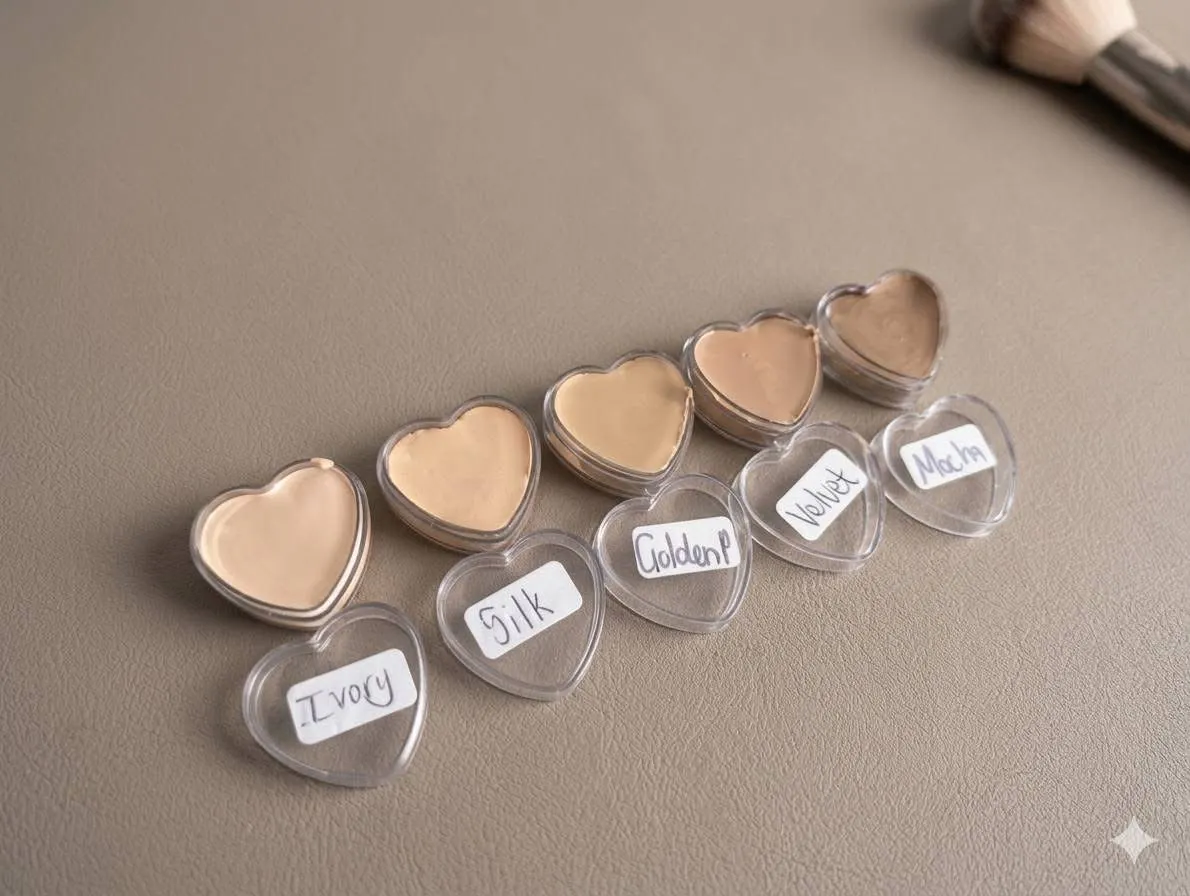
What it looks like on the skin:e
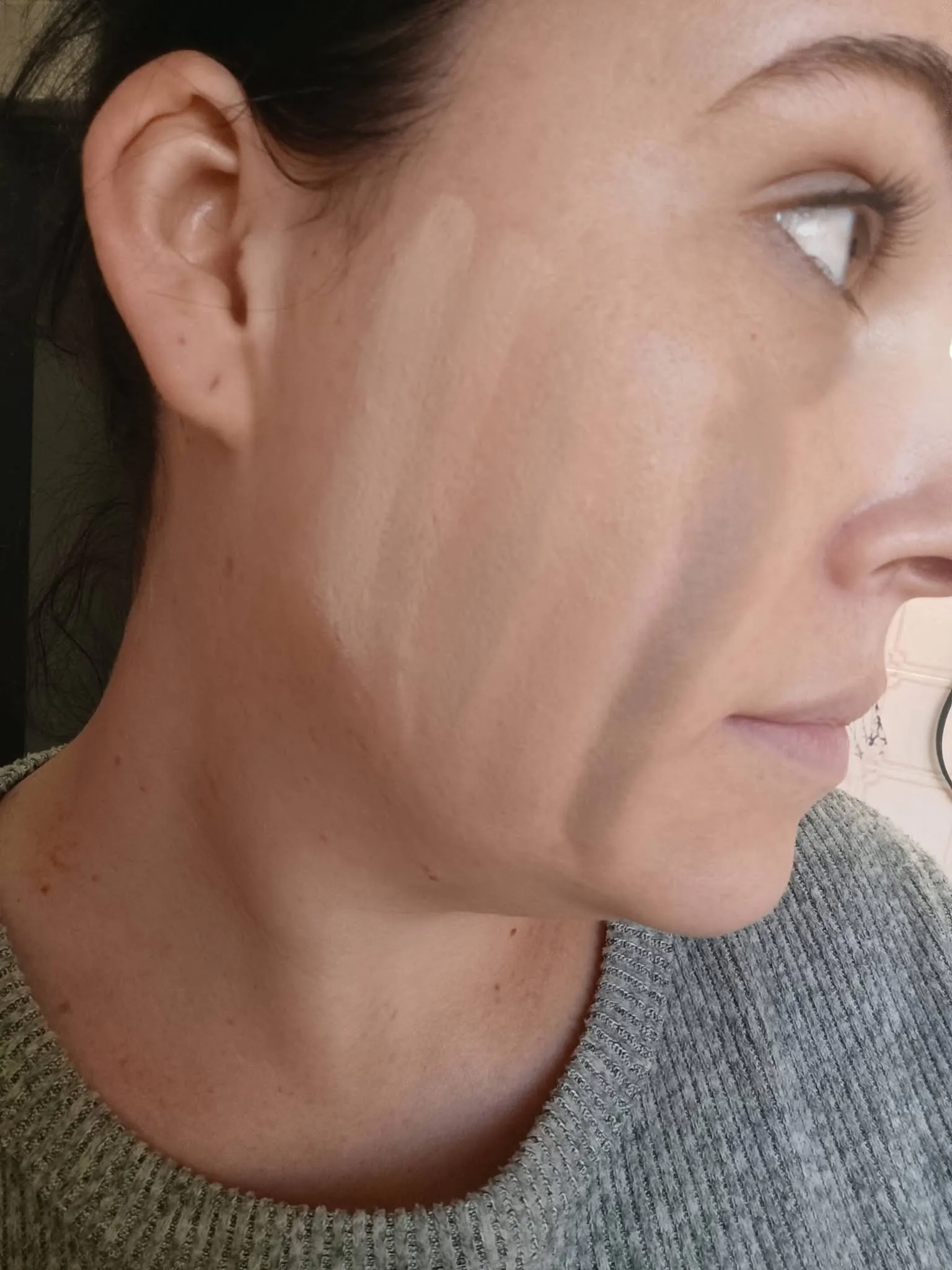
Matte finish is with TITANIUM.
For color, use OXIDES.
— chat gpt/gemini, as necessary, is your best friend for fixing mistakes... 🤗
FIRE 🔥 CIDER “basics.”
You can make FIRE CIDER many different ways, but there are BSICS to follow, to get the best IMMUNITY BUILDING BENEFITS. This information includes many different reciprs, as well as the basics. Remember that the base solution is Apple 🍎 Cider Vinegar, with the mother.
DOSING — Don’t add honey until after the infusion has steeped for 4-8 weeks. Honey can be added for flavor, in teas … or it can be consumed “straight,” at 1-2 Tablespoons daily. 4X daily if you are ill.
The moment it doesn’t have the basics -
• allium,
• garlic,
• ginger,
• horseradish,
• chili peppers,
• whole orange,
• whole lemon,
• burdock,
• turmeric,
• rosemary - it loses effectiveness.
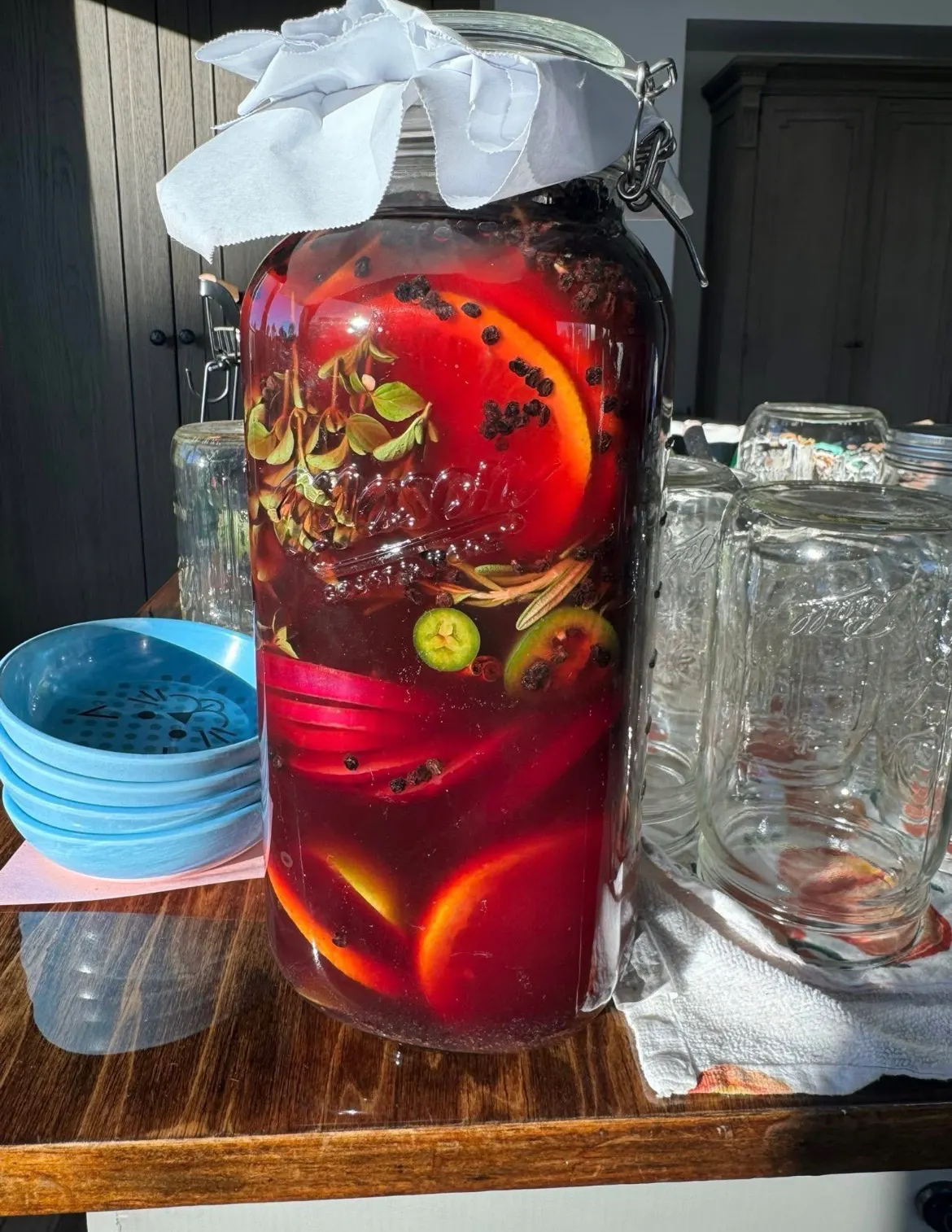
This was MY first attempt at FIRE 🔥 CIDER, and the taste is really phenomenal!

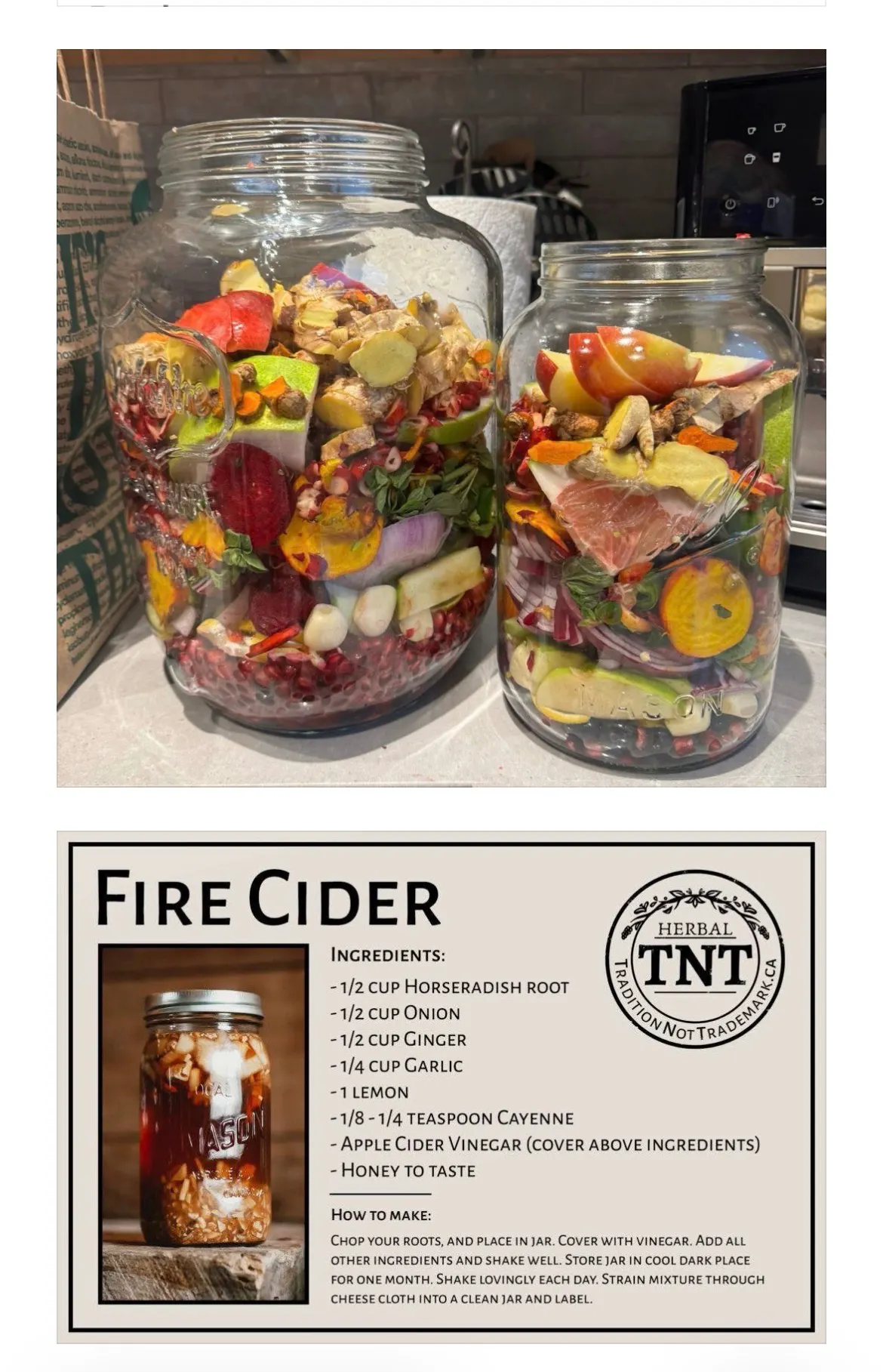
— Love this girl (in attached LINK). She's so funny. Delightful Kentucky Hick. Lol!! Kerr-pow!!!
Check out this video, "Appalachian forager fire cider"
https://share.google/zjdFT7yuwHYo8wOJ7
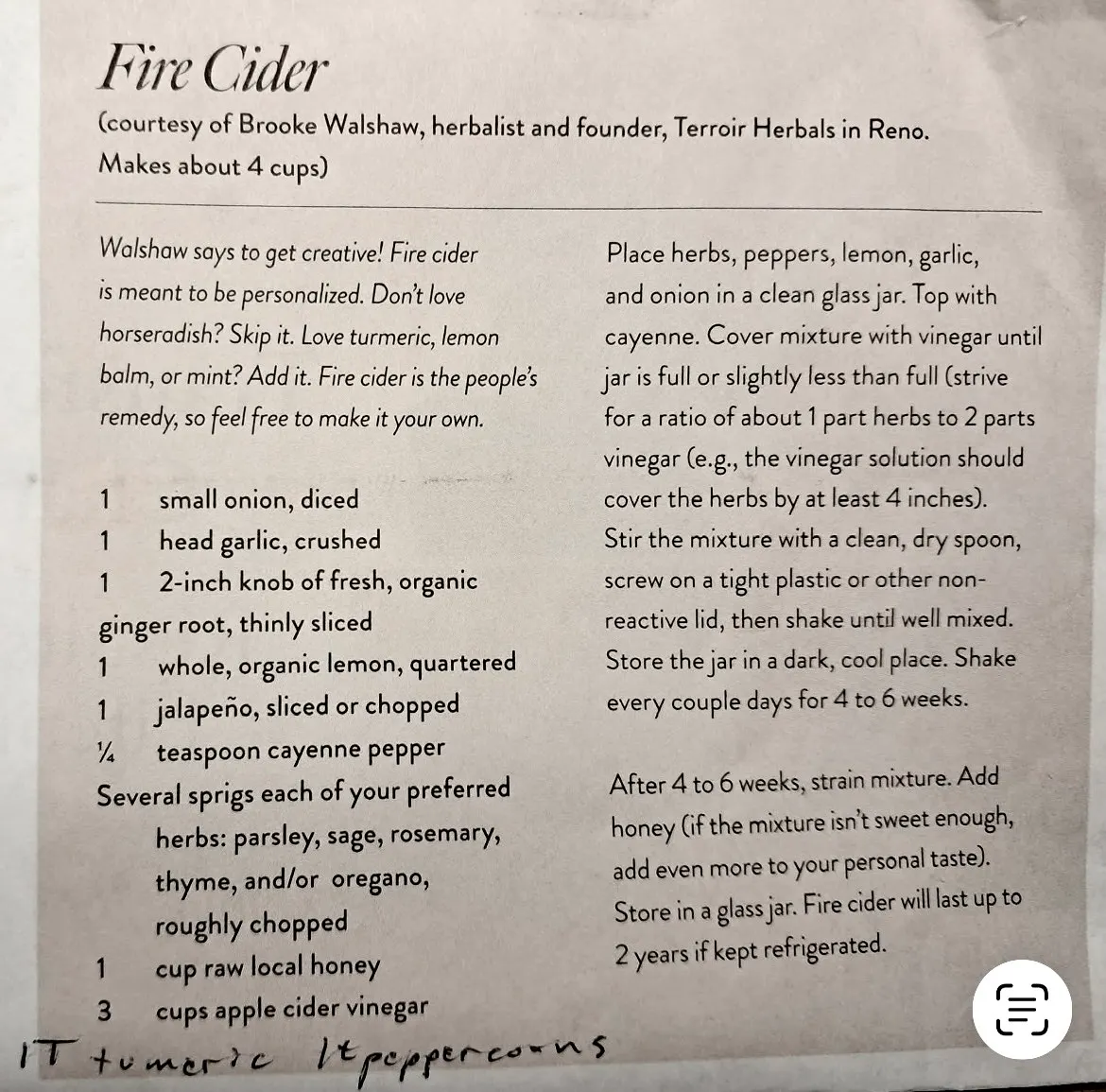
The following are various different recipes:
FIRE 🔥 CIDER
Posted on October 17, 2024
Homemade Fire Cider Recipe: A spicy, pungent, herbal tonic with a sweet glow. Drink it each morning to enjoy its health-boosting effects or get creative and explore the many ways to use fire cider shared in the post! Fire Cider Tonic is an age-old remedy popular in the herbal community, and especially popular during flu season. Learn more about this magical tonic and how easy it is to make!
PREPARATION TIME:
Prep Time: 20 minutes + 28 days
Ingredients:
• 3 cups Organic Raw Unfiltered Apple Cider Vinegar plus more as needed to cover the ingredients
• ✅ 7 oz Fresh Horseradish, grated or roughly chopped approximately 1 cup
• 7 oz Fresh Ginger, grated or roughly chopped approximately 1 cup
• 2 oz Fresh Turmeric, grated or roughly chopped approximately 1/4 cup (can sub 1 tbsp turmeric powder)
• 1 Medium Onion, chopped
• 10 Garlic Cloves, crushed or chopped
• 1 Lemon, sliced
• 1 Orange, sliced
• 2-3 Jalapeño Peppers, sliced or 1/4 – 1/2 tsp organic cayenne powder
• 3 Cinnamon Sticks
• ✅ 3 Sprigs of Fresh Rosemary approximately 0. 1o z
• 6 Sprigs of Fresh Thyme approximately 0.1oz
• 1 tsp Peppercorn optional
• Sweeten Once Fire Cider Has Fermented And Is Ready To Use
• 1/2 cup honey, plus more as desired
Instructions:
Peel and grate the horseradish. Add it to a 1.5-2 qt sized jar along with the sliced ginger, turmeric, jalapenos, onion, orange, lemon, and garlic. Then, add the fresh herbs, cinnamon sticks, and peppercorns.
Pour the apple cider vinegar into the jar, making sure all the ingredients are fully covered. Add as much ACV as needed to cover the ingredients (this prevents the ingredients from spoiling).
Seal the jar. Use a piece of parchment paper under the lid to keep the vinegar from touching the metal, or a plastic lid if you have one.
Shake the jar to combine the ingredients and store the jar in a dark, cool place for up to 4 weeks.
Remember to shake the jar once daily to mix the ingredients. (I like to store the jar in the pantry where I can see it daily and remember to shake it)
After three to four weeks, use a fine-mesh strainer or cheesecloth to strain out the pulp and solid ingredients. Squeeze as much liquid out of the ingredients as you can.
Stir in the honey until it is incorporated. Taste and add more honey to reach your desired sweetness. Your fire cider should taste hot, spicy, and sweet.
Store sealed in an airtight jar. Keep in the refrigerator or in a dry, cool place for up to 6 months. Enjoy 1-2 tablespoons daily or use the fire tonic when cooking!
Notes:
The most common way to use fire cider tonic is to drink 1-2 tablespoons each morning. You can sweeten it with a bit of honey before drinking it (which makes it super tasty!) or dilute it with water or juice.
Enjoy a tablespoon or two a day, or when you feel you are coming down with a cold.
goodfoodbaddie.com offers nutritional information for recipes contained on this site. This information is provided as a courtesy and is an estimate only. To obtain the most accurate representation of the nutritional information in any given recipe, you should calculate the nutritional information with the actual ingredients you used to make the recipe. For more information read our Nutritional Disclaimer.
Nutrition:
Serving: 2 table spoons | Calories: 18 k cal | Carbohydrates: 3 g | Sodium: 10 mg | Potassium: 31 mg | Sugar: 3 g | Calcium: 8 mg
_________________________
ANOTHER FIRE CIDER RECIPE
It’s time to restock the cold and flu supplies for the year!
First, finishing off the Fire Cider. Will post homemade natural cough drops separately.
You can take 2 tablespoons daily of Fire Cider as an immune booster (think shot glass) or wait and take 2 tablespoons, 2 times a day when you feel something coming on.
3 cup raw honey
3 cup filtered water
2 cup apple cider vinegar
1 red onion, sliced
2 jalapeños, sliced
1 head garlic, peeled and sliced
4 lemons, sliced, peel on
1 orange, sliced, peel on
✅ 1 ginger root, sliced
3 cinnamon sticks
2 tblsp turmeric
✅ 1 tsp oregano
1 tblsp cayenne
2 sprigs thyme
1/2 cup dried elderberries, minced
Combine items in a pot and bring to a boil. Reduce heat and let simmer for additional 10 minutes. Remove from flame and let cool.
Once cool pour into a blender and liquify. Strain through cheesecloth into bottle or jar of choice.
Feel free to add your own personal touch. Drink quick!
_____________
Fire Cider - lemon, lime, oranges, grapefruit, habanero, jalapeno, onion, shallot, garlic, horseradish, ginger, tumeric, black pepper, cinnamon, rosemary, thyme, honey, and apple cider vinegar
__________________________
Another RECIPE:
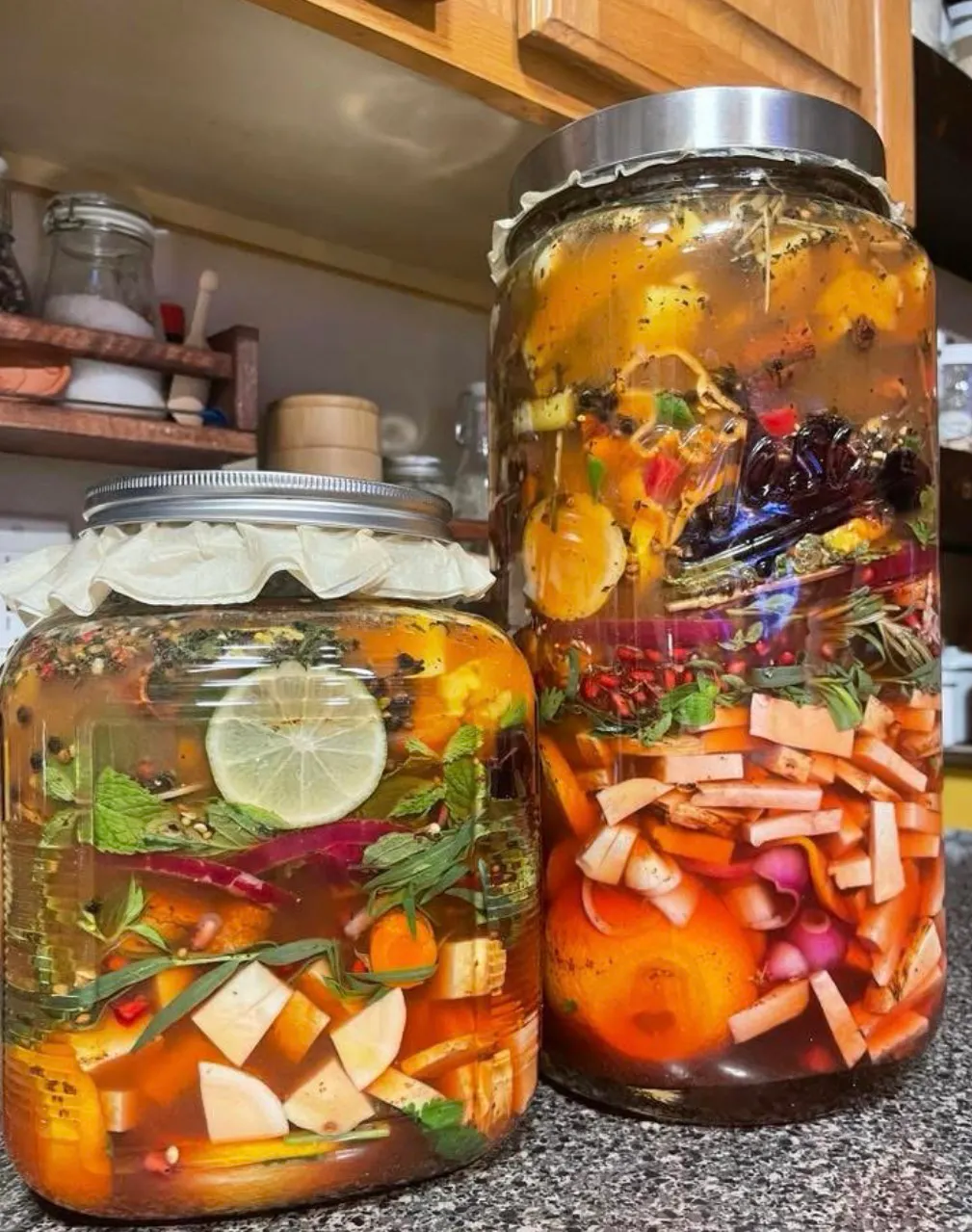
Made some earlier today. I used what’s pictured in addition to cloves, cinnamon sticks and cayenne pepper. Made this poster to go with it when I post my jar. Have to change the “4” years.
• Lemon
• Orange
• Rosemary
• Garlic cloves
• Jalapeño
• Onion
• Ginger
• Cloves
• Cinnamon
• Cayenne
Optional
• horse radish
• Thyme
• Peppercorns
• Habanero
• Parsley
• Shallot
• Cinnamon sticks
• Elderberries

_______
___________
I use
• lemons,
• oranges,
• 8 to 10 cloves of garlic,
• 1 purple onion,
• fresh rosemary,
• fresh oregano,
• fresh thyme,
• fresh horseradish,
• fresh ginger,
• fresh turmeric,
• black peppercorns,
• 1 jalapeno,
• 1 serrano pepper,
• cinnamon sticks,
• cloves,
• ACV to cover.
• Put wax paper inside of lid. Shake daily , let brew for 6 to 8 weeks. Strain and put in a jar with a plastic lid.
________________
FIRE CIDER
There are no specific measurements because you can put “anything HEALTHY” in it but this is what I do.
Quarter or slice: (coarse grate)
• 1 RED Onion
• 14 cloves of garlic
• 1/2 cup fresh ginger
• 1/2 cup fresh turmeric (coarse grate, or slice)
• 1/4 fresh horseradish
• 2 large fresh jalapeños
• 1 fresh cayenne pepper
ADD WHOLE
• 4 cinnamon sticks
• 4 sprigs of fresh rosemary
• handful of fresh thyme
• FRESH Oregano; I make cuts in leaves
• A little bit of fresh Basil
• 2 Oranges • Quartered or sliced
• 2 limes • Quartered or sliced
• 1 lemon • Quartered or sliced
• 1/4 cup black peppercorns
ADD ENOUGH TO COVER
ACV with the mother
• You can also add dried elderberries
Press everything down and make sure it’s all covered. I use a mason jar weight to keep it submerged. Put a piece of unbleached parchment paper between the weight and lid. Everyday shake it up and leave it for at least 6 weeks in a dark, cool cabinet. Then strain it and use whenever you need it. You can dehydrate all the herbs and fruits then blend to make capsules and use those also.



________
Other photos …


LOVE THIS THANK YOU SISTER!! so grateful for this share
Billionaires Rockefeller and Carnegie funded the FLEXNER REPORT in 1910.

In 1910, John D. Rockefeller and Andrew Carnegie paid for a report that would reshape American medicine forever. 📜
Within 25 years, half of all medical schools shut down.
The ones teaching natural healing, preventive care, electrical medicine… all gone.
Only the schools teaching drugs and surgery survived.
In 1910, Abraham Flexner—a researcher funded by Andrew Carnegie—published a 300-page report that changed American medicine forever.
🔎 The FLEXNER Report. 📖
It evaluated every medical school in America.
And declared that only "scientific" medicine—drugs and surgery—should be taught.
Everything else? "Unscientific." "Quackery." "Dangerous."
Within 25 years, the impact was devastating:
📉 160 medical schools in 1904
📉 Only 66 left by 1935
📉 94 schools teaching natural healing—gone
The schools that survived? The ones that agreed to teach pharmaceutical medicine. 💊
And here's the part that should make your blood boil... 😤
John D. Rockefeller—whose fortune came from petroleum and chemicals—poured MILLIONS into the schools that followed Flexner's recommendations.
His foundations funded the research.
Funded the textbooks.
Funded the entire infrastructure of "modern" medical education.
Why would an oil tycoon care so much about medical schools? 🤔
Because the same petroleum that fueled his empire also became the foundation of the pharmaceutical industry.
Synthetic drugs. Petroleum-based medications. Chemical interventions.
Rockefeller didn't just fund medical schools.
He funded a system that would turn the human body into a profit center for the next century. 💰
Here's what medical students USED to learn before 1910:
✅ Electrical medicine (using the body's natural electrical currents to heal)
✅ Hydrotherapy (water-based healing therapies)
✅ Botanical medicine (plant-based treatments)
✅ Homeopathy (natural remedies)
✅ Preventive care (keeping people healthy instead of treating disease)
✅ Nutritional therapy (food as medicine)
After the Flexner Report?
All of it—eliminated. ❌
Declared "unscientific." — In FACT, they called it “Snake Oil.”
Removed from medical textbooks.
Banned from curriculum.
Today, your doctor has exactly TWO tools in their toolkit:
1️⃣ Prescribe a drug
2️⃣ Recommend surgery
Not because those are always the best options.
But because every other option was systematically eliminated from their education.
Now here's what nobody talks about... 🤫
One of the "eliminated" healing modalities was called ELECTRICAL MEDICINE. ⚡
Hospitals had entire departments dedicated to it.
Doctors used electrical currents to treat:
🔹 Chronic pain
🔹 Inflammation
🔹 Circulatory problems
🔹 Heart conditions
🔹 Sleep disorders
It worked.
Patients got better.
And it cost almost nothing because electrons are FREE.
But electrical medicine had one fatal flaw: it couldn't be patented. 📝
You can't bottle electricity.
You can't put it in a pill.
You can't charge $500 a month for it.
So when the Flexner Report declared it "unscientific"—it disappeared.
And within a generation, electrical medicine was completely forgotten.
Fast forward to today. ⏩
Your doctor has NEVER heard of electrical medicine.
So when you mention something like "grounding"—reconnecting your body to the Earth's natural electrical charge—they dismiss it immediately.
Not because they studied it and found it ineffective.
But because their entire education was designed by people with a financial interest in drugs and surgery.
They're not being malicious.
They're simply operating within the system that Rockefeller and Carnegie built.
A system where natural healing doesn't exist. 😔
But here's the thing the Flexner Report couldn't erase: 💡
Your body is ELECTRICAL.
Every heartbeat is triggered by an electrical impulse. ❤️
Your brain communicates through electrical signals. 🧠
Your cells use electrical charges to function.
This is basic biology.
And for thousands of years, humans stayed connected to the Earth's electrical field. 🌍
Then we invented rubber-soled shoes.
Moved into insulated buildings.
Spent our days disconnected from the ground.
And chronic disease rates EXPLODED. 📈
Now, you might be thinking:
"If grounding is so important, can't I just walk outside barefoot?" 🦶
Good question.
And yes—walking barefoot on grass, dirt, or sand DOES ground you.
But there are three major problems with that approach:
🚨 PROBLEM #1: Modern Life Makes It Nearly Impossible
Most of us live in cities.
Our "ground" is concrete and asphalt—both insulate you from the Earth.
Our lawns are treated with chemicals you don't want on your skin.
And nobody's walking barefoot outside in January when it's 20 degrees. ❄️
🚨 PROBLEM #2: You Need Consistent, Extended Contact
Walking outside for 10 minutes won't fix chronic inflammation that's been building for years.
The research shows you need HOURS of grounding to see significant results.
Ideally while you sleep—when your body does its deepest healing. 😴
🚨 PROBLEM #3: You Can't Measure or Control It
When you walk outside, you have no idea if you're actually grounded.
Dry grass? Not conductive.
Shoes with any rubber? Insulated.
Dehydrated skin? Poor conductivity.
You're guessing. And hoping. 🤷
That's why the research showing grounding's effects wasn't done with people walking barefoot outside.
It was done with grounding devices that provide consistent, measurable contact with the Earth's electrical field. 🔬
And the results?
They're nothing short of extraordinary.
📊 A double-blind, placebo-controlled, peer-reviewed study published in "Healthcare" showed grounding led to an almost 10x improvement in sleep quality.
📊 Another study showed a 200% DROP in pain levels.
📊 One published in "Biomedical Journal" showed an 83% reduction in chronic pain.
📊 And one showed an astonishing 273% reduction in unhealthy blood thickness.
Not to mention countless others showing improvements in inflammation markers, cortisol levels, and stress response.
So this isn't fringe science. 🧪
It's published in medical journals and conducted by real PhD researchers.
Now, given all this science…
I recommend all my patients at least "try" grounding for a few months at night. 🌙
And there's one company I trust that's made grounding accessible for modern life.
They're called The Grounding Co. ✨
They make grounding sheets that plug into the ground port of your electrical outlet (the third prong—the one that's literally connected to the Earth). 🔌
You sleep on the sheet.
Your body grounds for 7-8 hours.
You wake up with less inflammation, better sleep, and less pain. 💪
No walking barefoot in freezing weather.
No guessing if you're actually grounded.
Just consistent, measurable contact with the Earth's electrical field.
While you sleep.
Thousands of people—especially seniors dealing with chronic pain, inflammation, and sleep problems—are reporting results that sound almost too good to be true. 🙌
But they're not.
They're simply reconnecting to something the Flexner Report tried to erase:
The body's natural electrical healing. ⚡
Here's the bottom line: 👇
Your doctor isn't ignoring grounding because they evaluated the evidence and found it lacking.
They're ignoring it because their entire education was shaped by men who profited from your dependence on drugs and surgery.
The Flexner Report didn't improve medicine.
It eliminated competition.
And for 114 years, we've been paying the price with our health.
But you don't have to keep playing by their rules. 🙅
You can reconnect to the healing modality they tried to erase.
👇 Click below to learn more about grounding and how The Grounding Co. is helping thousands of people reclaim their health.
Your body has been waiting 114 years for this.
Isn't it time you finally took back what they tried to take from you? 💪🔌
_________________
I’ve been a Nurse/NP about 40 years, and I’m studying Natural Remedies on my own.
✅ We NEED 100% Natural LINEN (sheets, bandages, clothing).
✅ We NEED “REAL, natural food,” made from scratch, and not mass produced manufactured foods.
✅ We NEED GROUNDING
✅ We NEED SUN ROOMS
✅ We NEED SPIRITUALITY, and connection with God!
✅ We NEED healing tinctures, home rendered Beef TALLOW, Apple 🍎 Cider Vinegar, Naturally fermented foods.
— The problem is, there’s no money in these things, and they don’t keep “Allopathic Medicine in business.
They’ve worked on eliminating everything that heals naturally. I’m investigating how to get health, the way GOD INTENDED.
__________________
Now WE KNOW where the REAL SNAKE OIL “Medicine” actually came from:
~ REVELATION 18:23.


It is very interesting that the word “drug” does not appear in the KJV—even when examining the 1611 edition—yet it does appear in the TS2009 translation. I checked my own copy of the 1611 KJV and confirmed that the word is not present there, which makes its inclusion in the TS2009 particularly noteworthy.
-
Revelation 18:23 - King James Version (1611)
23 And the light of a candle shall shine no more at all in thee; and the voice of the bridegroom and of the bride shall be heard no more at all in thee: for thy merchants were the great men of the earth; for by thy sorceries were all nations deceived.
-
Ḥazon (Revelation) 18:23 TS2009
23 And the light of a lamp shall not shine in you any more at all. And the voice of bridegroom and bride shall not be heard in you any more at all. For your merchants were the great ones of the earth, for by your drug sorcery all the nations were led astray.
LINEN clothing, bedsheets, and their healing properties. What’s against your skin makes a huge difference. The Bible makes numerous references to various types of cloth/fabric, for multiple reasons.
I am studying LINEN ❤️ CLOTHING and BEDSHEETS, for natural healing.
It’s Biblical, and there’s definitely research on its healing properties.
The wrong fabrics can definitely bring ❤️🩹 ill 😵health. Is it any wonder, it’sextremely difficultto find and buy genuine LINEN garments and bedsheets these days? Even in hospitals !!!
_______
11 Health Benefits of Linen: Why It’s the Highest Frequency Fabric
by
in Self Care Posted on
10/29/2023 09:51 AM
INSIDE: Discover the extraordinary benefits of linen and why it's at the forefront of high vibration fabrics. Elevate your well-being with linen's natural wonders.
Throughout history, across diverse cultures, people have donned linen clothing, and this practice, especially among spiritual leaders and gurus, sparks some curious questions…
Was linen chosen solely out of necessity, or did these individuals possess knowledge about the health benefits of linen that we are only now beginning to understand?
The Bible and Torah extol the virtues of linen as a sacred fabric.
Why?
The answers to these inquiries may seem esoteric, but there are plenty of scientific merits to the benefits of linen.
The reverence for linen finds its roots in the remarkable light frequency it emits, a quality unmatched by any other fabric. Linen is derived from the stalk of the flax plant, which is historically recognized for its healing properties—so much so that the Latin term for flax, "linum," translates to "being most useful."
In the early 1900s, hospitals used linen sheets because of their exceptional ability to expedite the healing process, alleviating pain, inflammation, and wounds in the process. Patients would often experience overnight recoveries while cocooned within the nurturing embrace of pure linen.
Today, our textiles primarily consist of synthetic, plastic-based materials, which, regrettably, lack the healing frequencies that linen offers, thus prolonging illnesses.
Let’s dig in and learn more about this high vibration fabric and discover how integrating it into our lives can enhance our well-being.

To comprehend the benefits of linen, we can look to fabric frequency charts. These measurements are expressed in angstroms, representing units of vital light energy:
Linen, Wool, Cashmere: 5000
Hemp: Measurements unavailable, but it's renowned for its high vibrational properties, though it is significantly lower than linen fabric.
Organic Unbleached Cotton: 100
Bleached or Colored Cotton: 40
Leather: 30
Silk & Bamboo: 15
All Plastics (Polyester, Acrylic, Spandex, Lycra, Viscose, Polyurethane, Rayon, Nylon): 0
To understand how the frequency of fabrics affects us, we have to first comprehend the concept of human frequency. To do that, let’s learn from a man who has studied it.
Nobel laureate, Dr. Otto Warburg, observed that the frequency readings of healthy adults typically range between 70 and 90. He also found that individuals with frequencies below 50 often suffer from chronic diseases, while those with life-threatening ailments like cancer exhibit readings below 15.
Now that we know that, we can better understand how the frequency of different fabrics can impact our own vibration.
And as you can see, if we are wearing primarily plastic fabrics, we are blanketing ourselves in frequencies below people who have cancer.
Dr. Heidi Crawford-Yellen's 2003 study on fabric frequencies gives us many insights into fabric frequencies.
She utilized the Ag-Environ machine to shed light on the high vibration qualities of certain fabrics. This device was originally designed to analyze the frequencies of agricultural commodities to optimize harvest timings.
However, its inventor, Bob Graham, adapted it for identifying the frequencies of illnesses to aid in recovery.
Physician and researcher, Dr. Philip Callahan studied the existence of Tachyon Energy through experiments with flax cloth, demonstrating that linen acts as an antenna for this energy, facilitating rapid healing. Tachyon energy, known for surpassing the speed of light, offers an alternate energy source for the human body.
Dr. Gabriel Cousens posits that various subtle energy fields, including those within the human body, can be invigorated by sources other than food and water. Some of those sources include sunlight, oxygen, electromagnetic energy, cosmic energy channeled through the chakras, direct cosmic energy, raw foods, and Tachyon Energy.
Linen is believed to be one such life-sustaining source, which might explain how Moses, Jesus, and Elijah were able to survive for weeks without food or water.
Are you wondering how certain fabrics impact your well-being and which materials to embrace or avoid?
Let’s learn more about the highest frequency fabrics, as well as an age-old warning that comes with them.
Certain fabrics consistently exhibit the highest vibrational frequencies, imparting profound healing potential. Linen, alongside wool and cashmere, reign supreme in this regard. And that’s where most of the benefits of linen come from.
Nevertheless, an important caveat emerges: wool and linen should never be worn together, as stated in the Bible and the Torah, and later validated through scientific studies.
Combining these natural fibers, though they are the highest vibrational frequency fabrics, produces opposing polarities that not only negate their benefits, but also can cause physical weakness and discomfort, similar to draining a battery.
Some natural fabrics neither heal nor harm and are considered neutral. Hemp, organic unbleached cotton, and leather fall into this category, since their frequencies are close to the frequency of the human body.
Fabrics with a "dead frequency" create a counterproductive environment, lowering a person’s vibration and rendering them vulnerable to diseases, inflammation, and melancholy. Rayon, bamboo, silk, polyester, nylon, viscose, acrylic, bleached or dyed non-organic cotton, and static-resistant fabrics fall into this category.

When we look at the lowest frequency fabrics in comparison to the high vibration fabrics, you might be wondering what causes the difference.
Fabrics can become toxic for three primary reasons:
Toxic Chemicals Are Used During Growth - One of the benefits of linen is that it thrives with minimal sunlight and water, requiring little to no pesticides. In contrast, cotton requires a substantial amount of pesticides, often involving toxic organophosphates, which are chemicals that were initially developed as nerve poisons during World War II.
Microfiber Pollution - Contemporary clothing mostly utilizes plastic and petroleum-based fibers, which are produced with heat-intensive processes that release harmful toxins into the environment during production and washing. This microfiber pollution is now recognized as a primary source of ocean debris, endangering marine life (and us when we eat seafood).
Energetic Toxicity - Beyond the material composition, the energetic qualities of fabrics play a critical role in their impact on our health. Synthetic materials with frequencies equal to or below a dying person's frequency hinder the flow of healing light energy through the body, potentially weakening us and making us susceptible to illness and negative forces. Conversely, linen's high-frequency light energy raises the frequency of the body, promoting healing and vitality.
Now that we’ve established that linen is renowned for its high vibrational frequency, it’s time to discover the remarkable benefits of linen…
Scientific studies, including the work of Dr. Heidi Crawford-Yellen and Rabbi Ben-Hayil Yellen, have shown that linen significantly enhances the body's energy field. Hospitals once used pure linen sheets for their capacity to promote rapid healing, often enabling patients to recover without pharmaceutical intervention. This is why we call sheets “linens” in general.
Linen bandages also expedited wound healing, and patients on linen sheets exhibited reduced occurrences of bed sores.
Linen acts as an excellent filter, guarding against chemical exposure and dust. It reduces solar gamma radiation, offering natural sun protection without toxic chemicals. Additionally, flax fibers sourced from contaminated soil appear resistant to harmful radiation.
Linen is hypoallergenic, making it ideal for individuals with sensitive skin. It has been found effective in managing conditions such as eczema, psoriasis, and rashes.
One of the most beloved benefits of linen is its ability to swiftly absorb and release moisture—up to 20% of its dry weight—ensuring a cooling sensation when in contact with the skin. This feature also wicks moisture away, maintaining healthy skin by preserving moisture and promoting airflow.

Linen is resistant to bacteria and fungus, making it suitable for use in things like masks. Linen underwear and socks help eliminate odors and infections while providing breathability and uplifting emotions.
Linen is a natural fabric that doesn't accumulate static electricity, thereby eliminating the need for chemical treatments or toxic dryer sheets. This property safeguards against the attraction of radioactive energy from the environment, such as radon, a toxic and radioactive gas. Linen prevents electrostatic charge buildup, which is linked to conditions like restless leg syndrome.
Did you know that a main cause of restless leg syndrome is the buildup of electrostatic charge on the body? Often, babies become fussy because when they are wrapped in a blanket and they kick their legs, they gather up a static charge. Baby blankets used to be made of linen because it eliminates that static build up.
High-vibration fabrics, like linen, have a calming effect and have been shown to reduce pain.
Research reveals that sleeping on linen sheets leads to quicker and deeper sleep, with individuals waking up feeling rejuvenated. Linen's highest vibrational frequency stimulates blood flow, promotes relaxation, and activates the body's innate healing abilities.
Another benefit of linen fabric is that it grows softer with each use and wash. Its inherent durability can extend its lifespan up to two decades or more. This resilience, attributed to the silica content in flax fibers, sets linen apart from synthetic fabrics that tend to pill and degrade over time.
Linen's environmentally friendly attributes come from the fact that it requires minimal water and pesticide requirements during growth. It lacks the chemical processes of synthetic fabric production and does not contribute to microfiber pollution. Additionally, linen is a renewable resource, fully biodegradable, and requires no irrigation.
Linen is easy to clean, but it requires gentle treatment, with low-temperature washing and drying. If cared for properly, linen fabric becomes softer and more comfortable over time.
To ensure the authenticity of linen products, look for signs, such as:
Natural wrinkles
Softening with each wash
The presence of natural slubs (bumps and imperfections)
Rapid water absorption
A feeling of coolness to touch
Magic Linen - This is the best company I have found so far because they have such a nice selection of everything you could want in linen. From clothes to bedding to towels and table cloths, they have it all.
Amazon Sheets - Be careful when doing a general search on Amazon for linen because you can get burned. But before I found Magic Linen, I did purchase these linen sheets from Amazon for our bed, and absolutely love them. I’ll be replacing all of our boys’ sheets with them over time.
I'll be adding more to this list as I try new companies and determine if they are good ones or not.
If you’re looking to elevate your vibrational frequency and overall well-being (and who isn’t?), embrace high vibration fabrics like linen in your daily life. The benefits of linen embody the natural properties that can elevate your energy and encourage positive vibrations. Invest in linen sheets and high vibrational clothing made from linen to experience the transformative effects on your physical and spiritual well-being.
From WikiHOW
How to Make Natural Essential Oils
Co-authored by Lisa Bryant, ND
Last Updated: October 10, 2025 Fact Checked

Essential oils can be expensive to purchase from the store. If you want to avoid the cost, or simply love home projects, you can make essential oils on your own at home. There are several methods you can use to extract essential oils from plant material. Understand, however, homemade essential oils are not as strong as those bought in the store. You should still follow conventional safety instructions for use of essential oils, even when making your own at home.
This article is partially based on an interview with Lisa Bryant, ND, a Licensed Naturopathic Physician and natural medicine expert based in Portland, Oregon.
Method 1
Method 1 of 4:
1
Gather your materials. You can use a common oil, like olive or canola oil, to extract essential oils from plant material. You can also use ethyl alcohol to extract the oils, if you would prefer. Both methods use the same basic process. To start, gather the right supplies.
You will need plant material in the form of herbs of flowers, depending on the type of essential oil you're making. For basil essential oil, for example, use basil herbs. For rose essential oil, use rose petals. You can find herbs or flowers at a local grocery store or florist. Make sure any flowers you use are grown organically, as pesticides may be harmful to the skin. Get a large amount of whatever herb or flower you're using, as only a small amount of essential oils can be extracted at a time.
You will need two non-metal containers, such as ceramic crocks. You'll also need a strainer. You will need sealable bottles to store your mixture when you're finished.
You'll need a carrier oil, like canola or olive oil. If you want to use alcohol instead, aim for ethyl alcohol. If you cannot find this, you can also use unflavored vodka.
2
Place your plant material and oil or alcohol in a non-metal container. To start, pour a portion of your oils into your non-metal container. Pour enough to coat the bottom of the container, and then pour the alcohol or oil into the container. Pour just enough to cover the plant material completely.
3
Set the container aside for 24 to 48 hours. Find a safe place to store your container. Your container should be set somewhere where it's unlikely to be knocked over. You should keep it out of reach of children and pets. You'll be leaving the container in this place for 24 to 48 hours. If you want stronger essential oils, opt to set the container aside longer.
A high cabinet, which can be closed easily, is a good option if you have small children or pets.
Let other household members know you're making essential oils so they know not to disturb the container.
4
Strain your mixture. After the allotted time has passed, remove the container from its storage place. Take your strainer and pour the mixture through the strainer into another, similarly sized container.
Press the plant material lightly with your hand to squeeze out any excess liquid. This will result in more oils being released.
If you're using a large container, have someone else hold the other container while you pour to make sure nothing spills.
5
Add more plant material. At this point, your mixture should be giving off the scent of your chosen plant material. However, only a small amount of essential oil has been extracted so far. Rinse out the original crock and add another layer of plant material. Pour the fragrant mixture on top of the plant material.
6
Repeat the process until your essential oil is at your desired strength. Once again, set the container aside for 24 to 48 hours, and then strain the mixture. Repeat this until the mixture gives off a very strong scent of your chosen plant material. In general, it will take 6 to 8 rounds of treatment before you get a satisfactory batch of essential oils.
7
Store correctly. Once you're finished, pour the oil into one or two sealable bottles. Tighten the bottles securely and store the oils in a cool, dark place in your home.
Essential oils can be harmful if swallowed. If you have young children capable of opening bottles, make sure to store your oils out of their reach. You should also be careful not to store the oils out of reach of household pets, like dogs, that could chew through a container.
Method 2
Method 2 of 4:
1
Gather the right supplies. You can also extract essential oils by using steam to extract and capture the oils. You can do this using a crock pot, if you own one. To start, you'll need the following:
Plant material from your chosen essential oils
A crock pot
A glass container
A piece of cloth
2
Fill your crockpot with distilled water. Use distilled water here, to make sure your oils are not sullied by chemicals found in tap water. Fill your crock pot about halfway full, or three quarters of the way full, with water.
3
Place your plant material inside the crock pot. Take your chosen plant material. Place it inside the crock pot, allowing it to float on top of the water.
You should use just enough plant material that it comfortably fits in the crock pot with distilled water.
4
Cook the mixture on low for 24 hours. Turn the crock pot on low heat. Cover as you would when cooking meals using the crock pot. Allow it to cook on low for 24 hours.
Be careful where you leave the crock pot. Crockpots cook at low temperatures, and are generally safe to leave on when your'e not home. However, make sure to keep the crock pot in a safe place away from flammable materials.
5
Allow the mixture to sit in the crock pot for another 2 to 3 weeks. After the 24 hour period has passed, you can turn off the crock pot. You should also open the crock pot. Leave the mixture alone for 2 to 3 weeks to allow the oils to be fully extracted from the plants.
As you're leaving your crock pot open, it's important to find a safe place for it. This is particularly important if you have children or pets, as the water from the crock pot should not be ingested.
A high cabinet, which closes safely, may be your best option. Let other household members know you are making essential oils and they are not to disturb the crock pot.
6
Collect the oil from the surface of the water. After 2 to 3 weeks have passed, a small bit of visible oil should have risen to the surface of the water. You will want to collect this oil and transfer it to a dark, glass container.
You can use a cooking spoon or regular spoon to remove the oil. It may take quite a few scoops before you get all the oil. Be careful to collect only the essential oil, and not any water or plant material.
7
Cover the water with a piece of cloth and set aside for 24 hours. Take your cloth and place on top of the glass container. Set the container aside for 24 hours. After 24 hours have passed, any extra water will have evaporated and your essential oils will be safe to use.
As with the crock pot, it's vital that you take precaution when storing your container. Keep it out of reach of children and pets and place it in an area where it will not be disturbed.
Your essential oil should last for about 12 months. Place it in a sealable container after 24 hours have passed.
Method 3
Method 3 of 4:
1
Gather your materials. You may not have a crock pot. You can also use a simple pot of water to make essential oils, although you'll need some extra material. To start, gather the following:
Someone to help you, as this method requires two people
A cotton and linen bag, as well as string to tie it shut
Distilled water
A pot
A dark glass container
A piece of cloth
2
Put your plant material in the cotton or linen bag. Take your chosen plant material and place enough of it into your bag to fill the bag. Tie the bag shut securely. Be careful to make sure the bag is tied completely shut. Pull the knots tight as you tie, and hold the bag upside and shake it to make sure no plant material escapes.
3
Place your bag in a pot of water and bring it to a boil. Remember to make sure the water you're using is distilled. You do not want contaminants from tap water ruining the purity of your essential oils. Once the bag is submerged, bring the water to a boil.
4
Simmer the water for 24 hours. It can get complicated to simmer the water, as you should never leave a stove on unattended. You will have to have someone help you. The two of you can take turns watching the pot as it simmers for the full 24 hour period.
It's a good idea to do this on the weekends, as no one will have work obligations requiring them to wake up early.
If you're watching the pot late at night, make sure you're well rested. Use coffee and other caffeinated beverages to keep you alert as you watch the pot. If you fall asleep on duty, the stove could start a fire.
5
Collect the water from the surface of the pot. After the 24 hours of simmering are over, you will see some oil has risen to the surface of the water. Use a spoon to collect the oil and transfer it into a dark container. Make sure to get mostly oil and not a lot of water.
Squeeze the bag a little after collecting the initial oil. There may be a bit of essential oil still inside the bag.
6
Cover the water with a dark cloth and let it sit for a week. Cover the dark container with a cloth. Set it aside for 24 hours, as this will allow any extra water to evaporate. After this, your essential oil should be ready. You can place it in a sealable glass container. It should last about 12 months.
Be careful where you store your container for the 24 hour period. You do not want children or pets to drink the water. Keep it in a safe place, out of reach of others.
Method 4
Method 4 of 4:
1
Accept your oils will not be as pure.The major drawback to making essential oils at home is that they will not be as pure as store bought oils. Commercially made essential oils withdraw oils from plant materials using expensive equipment. Professional steaming methods, for example, require materials you would have to get from a chemistry lab. Homemade oils can be a fun project, but do not expect them to be as pure as commercially purchased oils.
2
Make sure to follow all regular safety guidelines regarding use of commercial essential oils. While your oils may not be as pure as store bought oils, you should follow similar safety instructions. It's better to be safe than sorry when dealing with essential oils. You should never put essential oils on your skin directly, as this can cause skin irritation or an allergic reaction. Essential oils should always be diluted in a carrier oil, like olive oil or canola oil.
Usually, you should aim for 3 to 10% dilution. Children, however, and people with sensitive skin should use only 1% dilutions of essential oil.
3
Consider whether making your own oils is worth the time. Essential oils can take weeks to make at home. Even after the process is finished, you'll be left with a product that is not as pure as a store bought equivalent. While essential oils are pricey, the cost of the amount of plant material you'll need for certain recipes may get high. You may be better off simply buying essential oils online, especially if you do not have a lot of spare time.
LINK: https://www.wikihow.com/Make-Essential-Oils
Welcome to American Patriot Social
Connect, share, and engage with community and build relationships.
This is an invitation-only community.
Already a member?